Home Market & Sectors Agriculture & Oceans
Government Identifies N$1.9 Billion Irrigation Investment Opportunities Across Four Projects
An estimated N$1.9 billion will be required to develop four major irrigation projects covering 13,000 hectares of agricultural land, as Government seeks to attract private investors to expand agricultural production and strengthen the country's capacity to produce food.
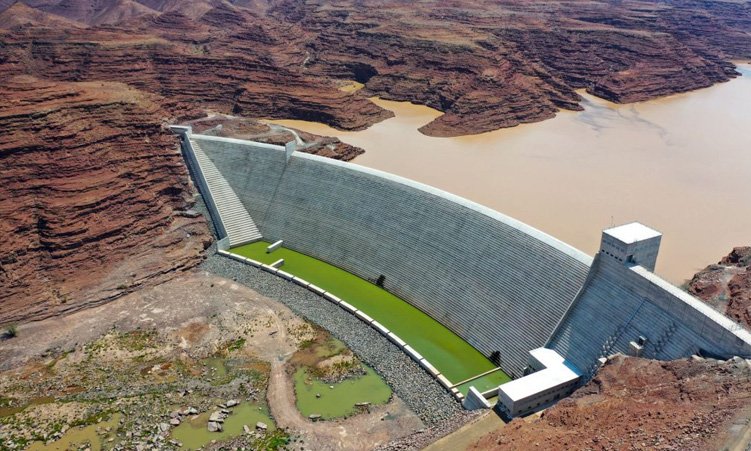
An estimated N$1.9 billion will be required to develop four major irrigation projects covering 13,000 hectares of agricultural land, as government seeks to attract private investors to expand agricultural production and strengthen the country's capacity to produce food.
The projects, located in the ||Karas, Kavango West and Zambezi regions, were presented by National Planning Commission Director General Kaire Mbuende at the Government Institutions Pension Fund (GIPF) Pension and Investment Symposium this month.
The proposed developments include Neckartal, Tandjieskoppe, Zone and Katima Mulilo Farm–Liselo, with estimated investment requirements ranging from N$370 million to N$650 million.
According to Mbuende, the projects offer opportunities for private sector participation through different development and operating arrangements, including build-operate-transfer models and lease-based partnerships.
The largest investment opportunity is the Tandjieskoppe irrigation project near Noordoewer, estimated to cost N$650 million and covering approximately 4,000 hectares.
The project is intended to support the production of lucerne, table grapes, dates and vegetables. Mbuende said its feasibility study has been completed, with project design still outstanding before further development can take place.
The Neckartal irrigation project, located near Keetmanshoop, is estimated to require N$490 million to develop approximately 5,000 hectares under a build-operate-transfer arrangement.
Mbuende indicated that feasibility and environmental studies have been completed, while designs have been finalised for 1,800 hectares of the proposed development.
In Kavango West, the Zone irrigation project is estimated to require N$389 million to develop approximately 2,000 hectares. The proposed arrangement combines a lease-based model with build-operate-transfer principles.
Unlike projects focused primarily on large-scale commercial production, Zone is expected to accommodate commercial, medium-scale and small-scale farming activities, potentially creating opportunities for emerging farmers to participate alongside established agricultural operators.
The fourth project, Katima Mulilo Farm–Liselo in the Zambezi Region, is estimated to require N$370 million and covers approximately 2,000 hectares.
The proposed agricultural activities include maize, wheat and vegetable production. Mbuende indicated that feasibility studies, environmental assessments and project designs have been completed.
Although the four projects represent an estimated N$1.9 billion investment opportunity, they are not all at the same stage of preparation.
Neckartal and Katima Mulilo Farm–Liselo have progressed through several feasibility, environmental and design processes. Tandjieskoppe has completed its feasibility study but still requires project design, while the presentation did not provide the same level of detail on the preparation status of the Zone project.
This distinction matters to potential investors because identifying an investment opportunity and establishing its estimated cost do not automatically mean that a project is ready for financing, construction or operation.
Investors will still need to assess the infrastructure requirements, financing arrangements, commercial viability, production capacity and access to markets before committing capital.
Mbuende said the next step is to engage potential agricultural operators and capital partners to examine the projects and determine how they can be developed and operated.
The proposed irrigation developments form part of Government's broader strategy to mobilise private investment into strategic economic sectors under the Sixth National Development Plan (NDP6).
Beyond the construction of irrigation infrastructure, the projects could expand domestic agricultural production, create employment and open opportunities for local businesses involved in farming, processing, logistics and the supply of agricultural inputs.
However, the economic benefits will depend on whether the proposed developments attract sufficient financing, secure capable operators and establish commercially sustainable production.
The N$1.9 billion opportunity is therefore not simply about developing irrigation infrastructure. It is about turning available agricultural land and water resources into productive assets that can strengthen domestic food production, support rural economic activity and increase the contribution of agriculture to the national economy.