Home Market & Sectors Agriculture & Oceans
AGRICULTURE AND OCEANS
Namibia’s Livestock Exports Continue as Ministry Maintains FMD Controls
Namibia has exported 6,294 cattle, goats and sheep to Mauritius despite ongoing Foot and Mouth Disease restrictions, highlighting continued access to international markets for local livestock exporters.
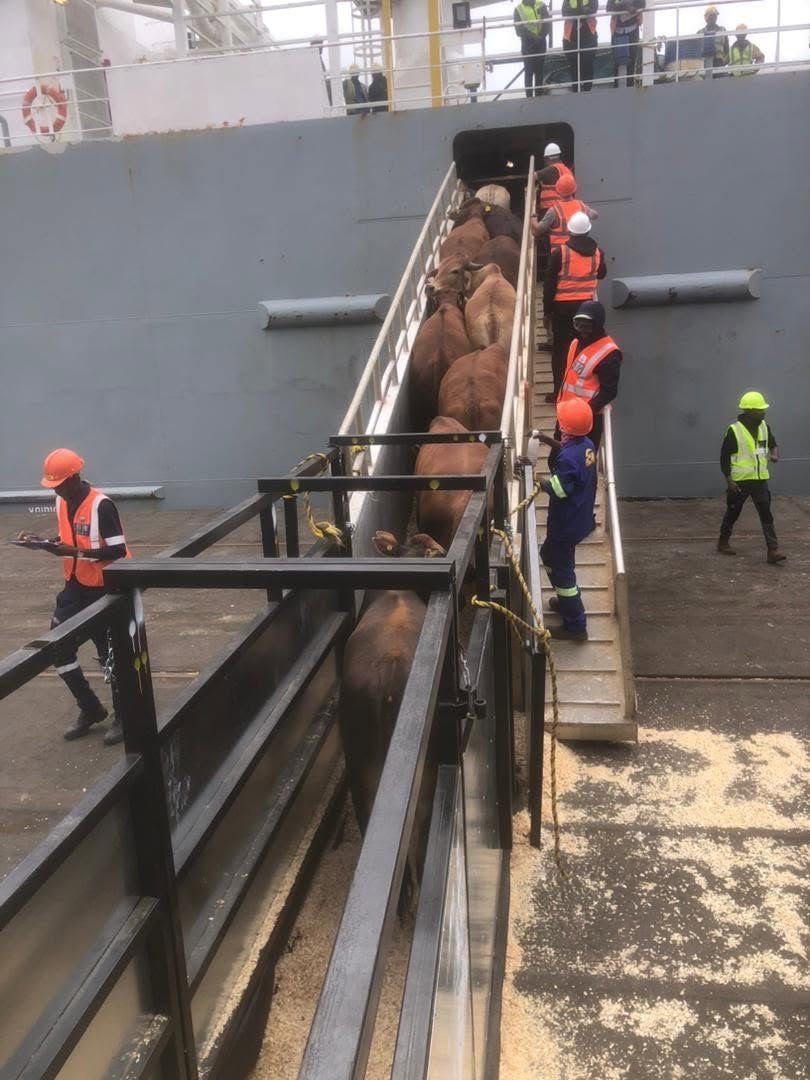
Namibia’s livestock export trade continues despite Foot and Mouth Disease (FMD) restrictions in parts of the country, with 6,294 cattle, goats and sheep exported to Mauritius between 11 and 14 November.
The consignment comprised 2,803 cattle, 2,147 goats and 1,344 sheep, which were purchased before FMD was declared in the //Kharas Region in September.
Ministry of Agriculture, Fisheries, Water and Land Reform Deputy Director of Public Relations , Romeo Muyunda said the consignment was exported in accordance with existing veterinary regulations, including requirements relating to animal health, traceability, movement control, health certification and animal welfare.
According to Muyunda, the export was facilitated under Section 6 of Veterinary Public Notification (VPN) No. 20 of 2026, which regulates the import, export and transit of animals and animal products during the outbreak.
Section 6(b) allows animals already standing and ready for export to be exported, excluding animals originating from the //Kharas Region, provided they meet the importing country’s requirements.
Muyunda clarified that the ministry had not created any special exemption to facilitate the shipment.
The development is significant for Namibia’s livestock industry, which supports a broader economic value chain involving farmers, livestock traders, transporters and other agricultural businesses.
While Mauritius was the destination for the latest consignment, Muyunda said it was not the only international market available to Namibian livestock exporters.
He said exports to other destinations remained possible, provided importing countries’ veterinary requirements were met and mutually agreed upon by the respective Veterinary Services.
Prospective exporters have been encouraged to approach their District State Veterinary Offices after obtaining the necessary import permits from their intended destination countries.
Maintaining access to these markets is particularly important for Namibia’s livestock industry, as prolonged disease restrictions could affect the ability of farmers and traders to move animals and fulfil international market requirements.
The ministry has, however, not disclosed the monetary value of the 6,294 animals exported to Mauritius or quantified the potential revenue losses associated with the outbreak.
Meanwhile, FMD control measures remain in place in the //Kharas and Zambezi regions, where vaccination, surveillance and livestock movement restrictions are continuing to contain the disease.
In the //Kharas Region, the first round of compulsory vaccination has been completed, covering 8,267 cattle across 90 farms.
The second vaccination round commenced on 16 November, alongside post-vaccination monitoring and intensified surveillance.
In the Zambezi Region, two vaccination rounds have been completed on Kalala Island, covering 53,479 cattle, representing more than 95% of the targeted population of 56,269 cattle.
A second vaccination round across the wider region commenced on 9 November, with 17,938 cattle vaccinated at the time of the ministry’s update. The campaign is expected to be completed in the second week of January 2027.
Movement restrictions remain in force within the designated Disease Management Area, covering Kabbe South and Kabbe North constituencies.
The movement of cloven-hoofed animals and their products from the affected area to the rest of the region remains prohibited.
Muyunda said no new FMD cases had been reported outside previously affected areas in recent weeks, while surveillance, vaccination and other disease-control interventions continued.
The ministry has urged farmers, livestock owners, traders and transporters to comply with movement restrictions, ensure animals are properly identified and registered, and immediately report suspected cases to the nearest District State Veterinary Office.