Home Market & Sectors Agriculture & Oceans
AGRICULTURAL INVESTMENT
Agra Invests N$61.4 Million In Infrastructure As Livestock Sector Faces Uncertainty
Agra's N$61.4 million investment in property and infrastructure highlights continued private-sector spending in Namibia's agricultural industry, despite growing uncertainty surrounding livestock production and market access.
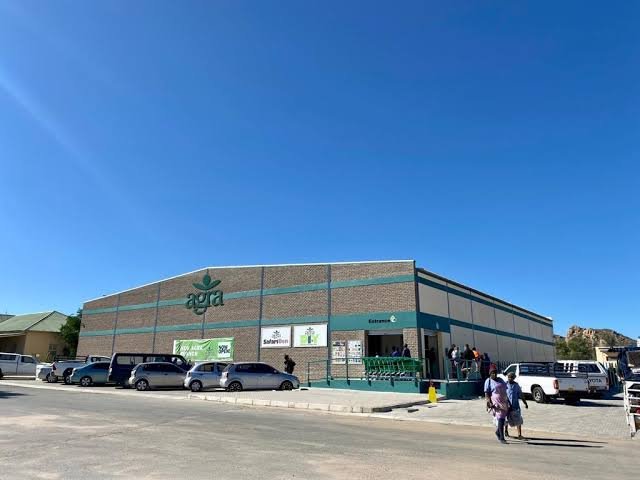
Agra Limited has invested N$61.4 million in property and infrastructure during its 2025/26 financial year, strengthening its operations and expanding agricultural services across Namibia as the livestock industry faces growing uncertainty.
In its agricultural publication, Agra Ring, the company reported investing N$61.4 million in property and infrastructure during the financial year under review.
The investment was directed towards expanding the company's national footprint, improving existing facilities and strengthening its product offering to farmers and other customers across the country.
Agra Chief Executive Officer, Arnold Klein said the investment reflects the company's confidence in Namibia's agricultural industry and its commitment to supporting farming communities.
"These investments reflect our confidence in Namibia and our commitment to serving farmers and communities across the country," Klein said.
The investment comes against a backdrop of uncertainty in the livestock industry following the outbreak of foot-and-mouth disease (FMD), which has placed pressure on livestock marketing, farmers' income and access to markets.
Although the infrastructure investment was made during the 2025/2026 financial year, before the outbreak, the company's financial position could help it maintain agricultural services during the current challenges.
Klein acknowledged that the outbreak presents serious economic challenges for livestock producers, particularly restrictions on livestock marketing, pressure on cash flow and uncertainty about future operations.
He said Agra's financial performance was supported by years of strategic investment, business expansion, disciplined financial management and improved operational efficiency.
"Our financial success is not achieved at the expense of the farmer," Klein said.
He explained that the company's financial strength allows it to continue investing in agriculture, offering products at competitive prices and supporting customers during difficult economic periods.
Agra also recorded its strongest financial performance in its 46-year history, surpassing the previous year's results.
Beyond infrastructure development, the company invested N$5.2 million in agricultural and community initiatives, including sponsorships, training and corporate social investment programmes.
According to the publication, N$1.55 million of this amount was directed towards FMD-related support and biosecurity measures aimed at protecting Namibia's agricultural industry.
The company also declared a dividend of 28.5 cents per share, amounting to N$29.1 million, while its share price increased by 14.5%, from N$3.85 to N$4.41.
Since 2017, Agra has paid and declared N$127.6 million in dividends to shareholders, more than 75% of whom are agricultural producers.
These returns provide an additional financial benefit to agricultural producers who hold shares in the company, alongside the products and services they obtain through its operations.
Klein said the company's financial strength and diversified business model position it to manage risks and continue supporting farmers during challenging periods.
The company's investment also highlights the role of private-sector infrastructure development in supporting agricultural activities, maintaining access to farming supplies and strengthening services across Namibia.
Agra maintained that its continued investment in infrastructure, agricultural development and shareholder returns remains central to supporting farmers and strengthening the long-term sustainability of Namibia's agricultural sector.