REGIONAL COMPETITION REGULATION
COMESA Introduces New Rules To Regulate Digital Markets And Business Mergers
The revised framework gives the regional competition authority new market inquiry powers, introduces digital merger thresholds and expands the scope of competition assessments.
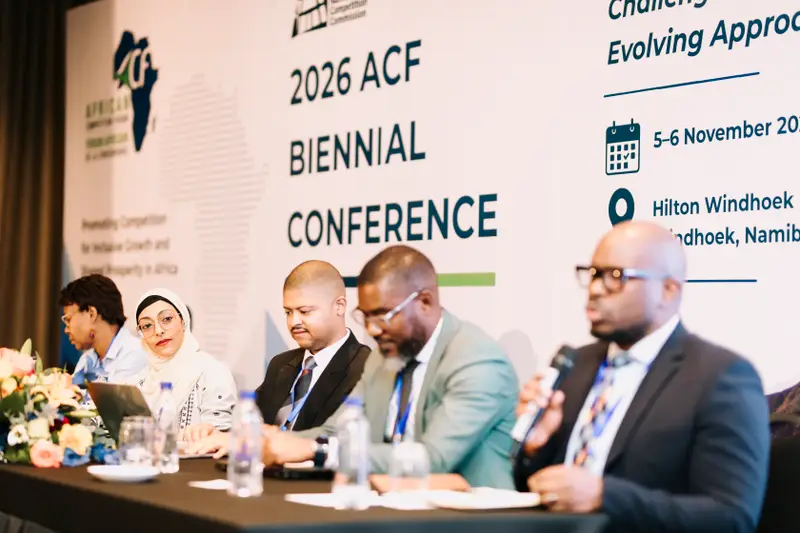
The Common Market for Eastern and Southern Africa (COMESA) has introduced new competition regulations that give its regional competition authority wider powers to investigate markets, regulate digital transactions and assess business mergers across its Common Market.
The Competition and Consumer Protection Regulations were adopted in December 2025, repealing the previous regulations established in 2004.
Speaking during the African Competition Forum (ACF) Biennial Conference in Windhoek on Thursday, COMESA's Manager of Mergers, Ali Kamanga, said the revised legal framework had expanded the commission's regulatory mandate.
Kamanga said the new law empowered the COMESA Competition and Consumer Commission, which he referred to as the Quad C, to conduct market inquiries.
“The Quad C has been given powers to conduct market inquiries, which is a significant departure from the previous law,” he said.
He said that the new powers would allow the commission to examine market conditions and investigate conduct that might not be identified through its ordinary enforcement processes.
Kamanga also linked the development to the commission's ability to examine different stages of production and distribution when investigating competition concerns.
“The powers to go on the market and conduct market inquiries, I think it's a very important addition to the Commission,” he said.
He pointed out that the previous legal framework lacked clear thresholds for digital merger notifications and criteria for identifying companies that could be designated as digital gatekeepers.
“What is happening in the digital space is something that we cannot ignore,” Kamanga said.
He added that, under the revised regulations, digital mergers with a transaction value of at least US$250 million can fall within the commission's jurisdiction where at least one party has a business presence in a COMESA member state.
The framework also allows the commission to designate digital gatekeepers and examine their conduct through abuse of dominance investigations, anti-competitive business practices and merger control.
The changes to digital-market regulation were among the wider competition issues raised by ACF members authorities representatives from, Kenya, Angola, Eswatini, Mauritius, South Africa and Tanzania.
Their country experiences included Kenya's review of its competition law to address digital markets, alongside inquiries into digital financial services and influencer marketing, while Angola reported action against an association over a minimum fee schedule for customs brokers, Eswatini highlighted its merger control enforcement, market studies in the beef and fast-moving consumer goods sectors, and development of a competition policy addressing digital markets and emerging technologies.
Meanwhile, Mauritius reported on amendments to its competition law, the move towards mandatory merger notification and the introduction of market inquiry powers.
The financial threshold has increased from US$50 million under the previous regulations to US$60 million, subject to the applicable common-market turnover, asset and regional presence requirements, according to Kamanga.
In addition, public interest considerations have also been incorporated into merger reviews and investigations into anti-competitive business practices, which include employment, the competitiveness of small and medium-sized enterprises, environmental protection, sustainability and innovation.
Kamanga clarified that these considerations would be assessed alongside the substantial lessening of competition test, which remains the primary competition assessment.
The commission is also revising its merger guidelines, abuse of dominance guidelines and confidentiality guidelines to align them with the new regulations.
Kamanga added that the process would involve stakeholder engagement, including consultations with the African Competition Forum.
Moreover, the revised framework provides for cooperation with other regional economic communities, including the East African Competition Authority and the Economic Community of West African States, as well as national competition authorities.
Kamanga also outlined the commission's competition advocacy activities, which include workshops for competition case handlers and lectures for university students studying law and economics.