Home Market & Sectors Mining & Minerals
MINING AND MINERALS
Headspring’s N$9.4bn Uranium Project Faces Regulatory Checks Before Pilot Mining
Additional groundwater investigations required by government could affect the development timeline of Headspring Investments’ proposed Wings uranium project in the Omaheke Region, which carries a projected investment of N$9.4 billion.
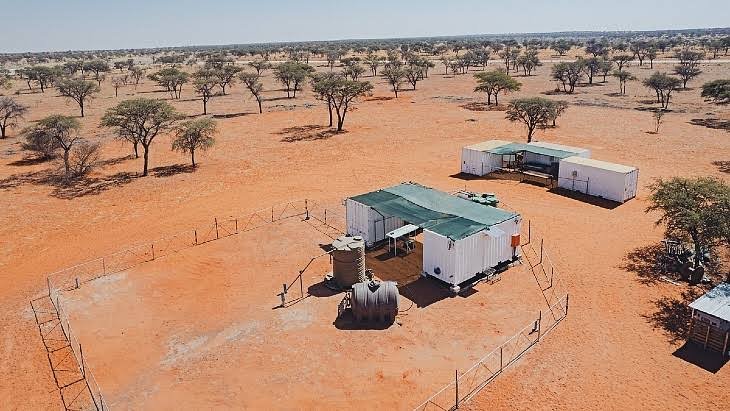
Headspring Investments’ proposed N$9.4 billion Wings uranium project in the Omaheke Region faces further regulatory requirements before it can proceed with borehole drilling, adding another step to the development of a project expected to generate significant investment and uranium production for Namibia's mining industry.
In a statement issued on Friday, the Ministry of Agriculture, Fisheries, Water and Land Reform Spokesperson, Romeo Muyunda reported that the borehole drilling licence granted to Headspring earlier in October does not automatically authorise the company to begin drilling, pilot in-situ leaching (ISL) operations or full-scale uranium mining.
Muyunda said the company must first submit a comprehensive inventory of existing and historical boreholes within a five to 10-kilometre radius of the proposed project at Farm Tripoli, as well as geophysical information covering a 50-kilometre radius.
According to Muyunda, the information is required to assess existing groundwater infrastructure, geological conditions and potential risks to underground water resources.
“Authorisation to commence the borehole drilling programme will be communicated in writing by the Executive Director only after the Ministry has reviewed the submitted information and confirmed that it is satisfactory,” Muyunda stated.
The additional requirements come as the company seeks to advance the Wings project towards pilot ISL operations, a uranium extraction method that involves circulating a leaching solution through underground uranium-bearing formations to recover the mineral.
However, Muyunda clarified that the current borehole drilling licence only relates to hydrogeological monitoring and exploration control and does not constitute approval for the proposed pilot operation.
The project has significant economic implications for Namibia's mining industry. Rosatom, through its subsidiary Headspring Investments, has previously indicated plans to invest up to US$500 million, equivalent to approximately N$9.4 billion, in the long-term uranium development project.
According to information published on Headspring Investments' official website, the proposed Wings project is expected to produce up to 3,000 tonnes of uranium annually, with an estimated mine life of at least 25 years, subject to regulatory approvals and successful project development.
The projected investment and production figures highlight the project's potential economic contribution, although its development timeline remains dependent on the completion of technical investigations and the necessary regulatory approvals.
Muyunda said the Ministry's assessment had been informed by an independent technical review conducted by the International Atomic Energy Agency (IAEA), which identified outstanding uncertainties concerning groundwater protection.
These include hydraulic confinement between the Auob Aquifer and the overlying Kalahari Aquifer, the ability of the proposed wellfield to maintain hydraulic containment, groundwater chemistry during and after leaching, and the ability to restore groundwater after operations.
“The IAEA review does not recommend either approval or rejection of the project,” Muyunda clarified, adding that the assessment provides an independent technical basis for Namibian authorities to make informed decisions.
Muyunda said the government had adopted a four-phase regulatory approach covering aquifer characterisation and confinement testing, wellfield installation and hydraulic-control testing, controlled pilot injection, and groundwater restoration and post-operational monitoring.
He emphasised that the introduction of leaching chemicals would only be considered once the preceding phases demonstrate adequate aquifer protection and effective hydraulic containment.
Progression between phases would not be automatic, as each stage would require thorough technical assessments and formal approval by the competent authorities, Muyunda said.
The proposed project is located near the Stampriet Transboundary Aquifer System, an important groundwater resource, making the protection of water supplies a central consideration in determining whether the proposed uranium extraction operation can proceed.
Muyunda said the IAEA expert report is available to the public upon request.