Investment Climate
President Calls For Permit Reforms To Accelerate Investment And Job Creation
Government is seeking to remove regulatory barriers and accelerate the implementation of 54 Cabinet directives as slowing economic growth and external pressures weigh on investment and employment creation.
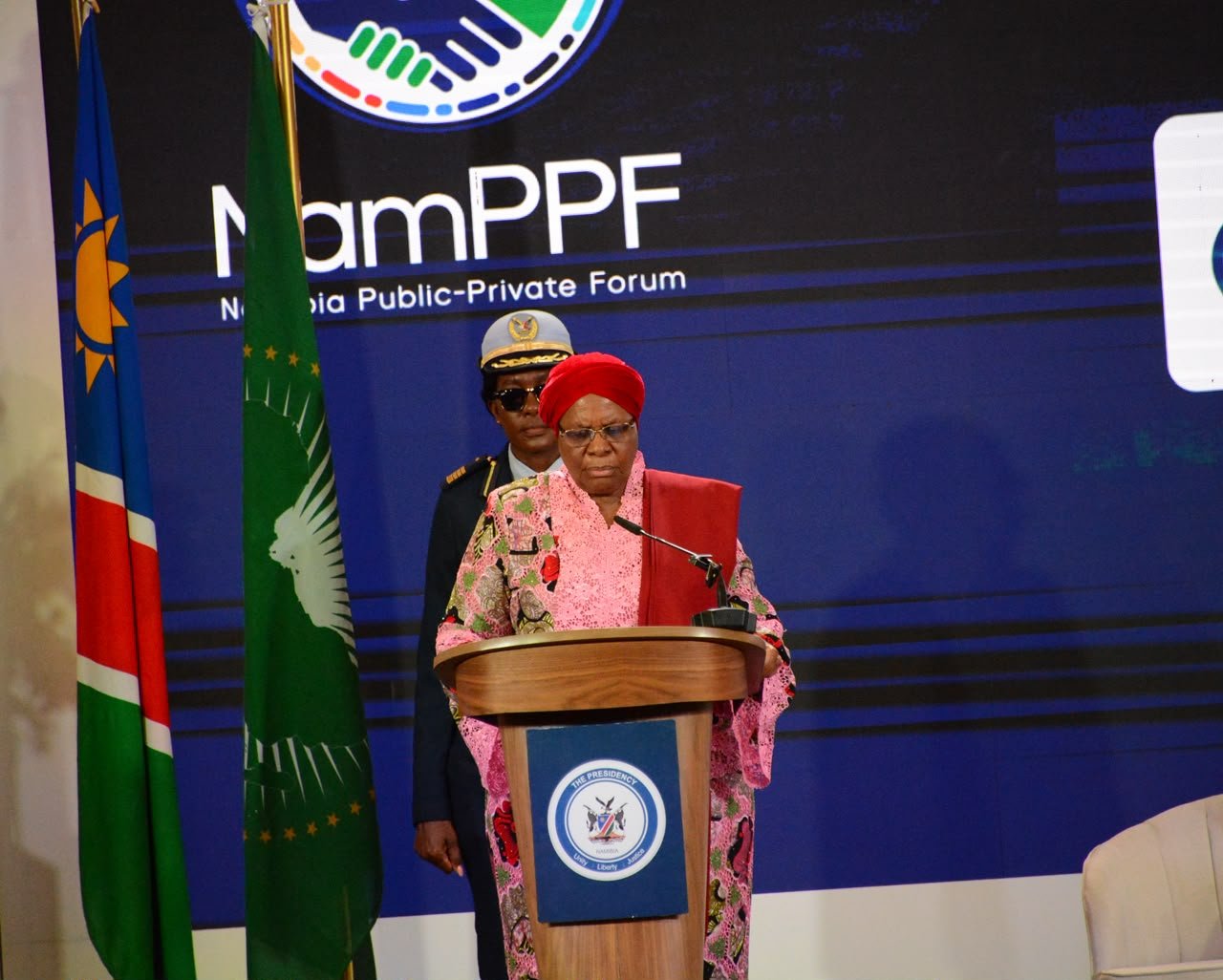
President Netumbo Nandi-Ndaitwah has given the private sector until the end of December to identify regulatory barriers and propose reforms to streamline business permit processes, attract investment and accelerate job creation.
Speaking at the second Namibia Public-Private Forum (NamPPF) in Windhoek on Wednesday, Nandi-Ndaitwah said overlapping regulatory requirements and lengthy administrative procedures were creating barriers to investment and business expansion.
“I task you, the private sector, to list all inhibiting permits and make recommendations on how they can be aligned without losing their intended purpose,” she said.
The President’s remarks come amid mounting economic pressures arising from geopolitical tensions, the foot-and-mouth disease (FMD) outbreak and weaker performance across key productive sectors, including agriculture, diamond mining and manufacturing.
According to figures presented by Nandi-Ndaitwah, the Namibia Statistics Agency recorded economic growth of 1.7% in 2025, while the Bank of Namibia projected growth of 2.1% for 2026.
Annual headline inflation reached 5.6% in October, compared with 3.6% a year earlier.
Nandi-Ndaitwah revealed that Cabinet had issued 54 directives across nine priority interventions following recommendations from three presidential task forces established after the inaugural forum in October last year.
“The 54 directives must now be pursued with urgency, coordination, and discipline,” she said.
The President highlighted progress in improving the investment environment through the operationalisation of the One-Stop Shop Business Facilitation Centre and the introduction of a five-year investor visa.
However, she identified limited digitalisation and poor interconnectivity between government services as challenges requiring urgent attention.
She further noted that the Investment Bill and Tax Reform Bill were before the National Assembly as part of broader efforts to improve the business environment.
Nandi-Ndaitwah urged government institutions and private sector stakeholders to accelerate investment in agriculture, agro-processing, mining, beneficiation, energy, manufacturing and tourism, while expanding economic participation among small and medium enterprises and start-ups.
“Let this second Namibia Public-Private Forum be remembered not for the number of speeches delivered or resolutions adopted, but for the quality of the decisions taken, the barriers removed, the investment mobilized, and the jobs created,” she said.