TRADE AND INDUSTRY
Namibia’s N$4.7bn Trade Gap Raises Questions Over Local Production
Namibia imported N$16.9 billion in goods in September, with petroleum, industrial materials and machinery dominating purchases, while uranium and gold remained among its leading exports.
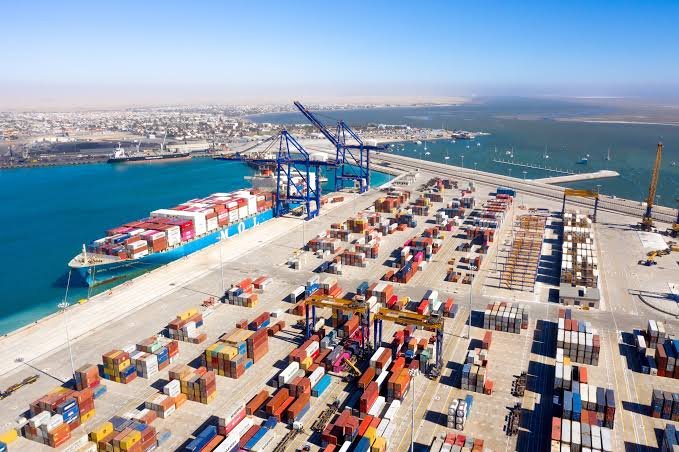
Namibia’s trade deficit widened to N$4.7 billion in September 2026 as the country imported goods worth N$16.9 billion against exports of N$12.2 billion.
This highlights the country’s continued reliance on foreign-produced goods and raising questions about the capacity of local industries to meet domestic demand.
According to the Namibia Statistics Agency’s (NSA) September 2026 International Merchandise Trade Statistics Bulletin, the deficit increased from N$3.9 billion in August and N$3.5 billion in September last year.
Petroleum oils were the country's largest import commodity, valued at N$2.2 billion, followed by sulphur and unroasted iron pyrites at N$1.6 billion. Nickel ores and concentrates accounted for N$747 million, while mechanical handling equipment and civil engineering equipment contributed N$598 million and N$548 million respectively.
The manufacturing sector accounted for the largest share of imports, valued at N$13.1 billion. Mining and quarrying imports amounted to N$3.6 billion, while agriculture, forestry and fishing imports stood at N$196 million.
The figures show the scale of Namibia’s demand for foreign goods, including fuel, industrial materials and equipment. However, not all imports represent goods that could immediately be produced locally, as machinery and industrial inputs are also needed to support domestic economic activity.
On the export side, uranium remained Namibia’s leading export commodity, generating N$3.4 billion, followed by non-monetary gold at N$1.4 billion and fish at N$1.1 billion.
The NSA reported that mining and quarrying contributed more than half of the country's export earnings, while manufacturing accounted for 44.9% and agriculture, forestry and fishing contributed 4.2%.
This highlights the importance of mineral exports to Namibia’s foreign earnings, while also pointing to opportunities to expand other productive sectors and increase the value of goods produced locally.
The country's dependence on foreign products is also reflected in its vehicle market, where consumers continue to turn to overseas suppliers for more affordable options.
South Africa remained Namibia’s largest import source, accounting for 30.7% of total imports, followed by China at 12.2%. China was the country's largest export destination, taking 36.2% of exports, while South Africa accounted for 19.6%.
Despite the overall trade deficit, Namibia recorded surpluses with China, Zambia and Botswana. Its largest trade deficit was with South Africa, amounting to N$2.8 billion.
The NSA said the figures highlight “the need for greater industrialization and export diversification to reduce import dependency and strengthen economic resilience.”
Expanding local production and value addition could create opportunities for Namibian businesses to supply more of the goods currently sourced from abroad, while helping the country diversify its export earnings.
However, identifying which imports could realistically be replaced by locally manufactured products requires an assessment of local production capacity, investment costs, skills, infrastructure and market demand.
The September trade figures therefore raise questions about how Namibia can strengthen its manufacturing base, support local businesses to compete and increase the range of goods it produces for both domestic and international markets.