Home Market & Sectors Banking & Finance
DIGITAL FINANCIAL SECURITY
Namibians Have Lost About N$50 Million to Fraud Within 10 Months of 2026
Reported financial fraud across Namibia's card, electronic funds transfer and electronic money channels has reached approximately N$50.3 million between January and October 2026, highlighting the need for stronger coordination to protect the country's digital financial system.
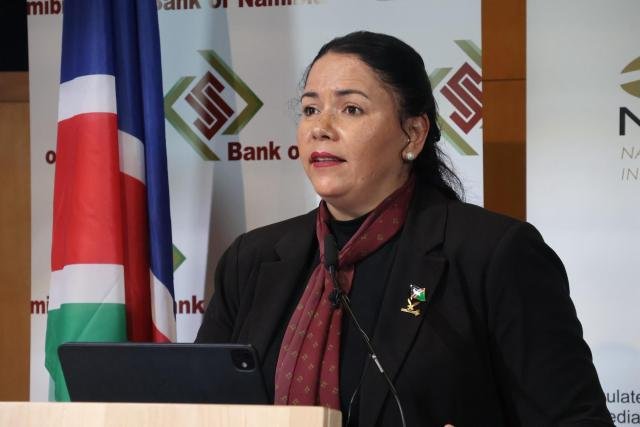
Namibia has recorded approximately N$50.3 million in reported financial fraud between January and October 2026, with stronger cooperation between financial institutions, regulators and law enforcement needed to address the growing threat.
Speaking at the Namibia Fraud & Cybersecurity Summit on Tuesday, Bank of Namibia Deputy Governor, Leonie Dunn said that the reported fraud affects individuals and businesses whose financial security and confidence are threatened by increasingly sophisticated criminal activities.
“Between January and October 2026, reported fraud across card, electronic funds transfer, and electronic money channels in Namibia amounted to approximately $50.3 million Namibian dollars,” Dunn said.
She said that although the figure is relatively small compared with international markets, its significance to Namibia's economy should not be underestimated, particularly given the financial losses and consequences experienced by those affected.
Dunn compared Namibia's figures with reported payment fraud in the United Kingdom, which she said had reached approximately £1.28 billion, while South Africa had recorded about $2.4 billion in digital banking crime and Singapore approximately US$913 million in scams over the same period.
She said that the comparisons demonstrate that cyber-enabled fraud is a cross-border challenge affecting both developed and emerging digital economies.
Dunn said that digital financial services are transforming how people transact, save and conduct business, with Namibia advancing its instant payment solution to enable faster, more accessible and interoperable payments.
The solution represents an important step towards supporting financial inclusion and broader economic participation, although she stressed that increased access needs to be accompanied by stronger security measures.
“Access alone will never be enough. People must have confidence that their money, their personal information, and their financial interests are at all times protected against risk that could compromise the security and the integrity and availability of financial services,” Dunn said.
She added that the National Payments System Vision and Strategy 2030 recognises the relationship between trust, resilience and user-centred financial services, with public education playing an important role in building confidence in digital payments.
Dunn also called for stronger cooperation across the financial sector, saying that fraudsters do not operate within institutional boundaries, national borders or regulatory mandates.
“The future of digital finance will belong not simply to those who innovate fastest, but to those who can innovate securely, collaborate decisively, and protect trust relentlessly,” she said.
She said that the financial sector needs to ensure that institutions work together to identify vulnerabilities, share information and respond to emerging threats rather than relying on individual organisations to address financial crime independently.
Meanwhile, Bankers Association of Namibia 's Chairperson and Nedbank Namibia Managing Director, Martha Murorua also stressed the importance of coordinated action, identifying collaboration between banks, the central bank, intelligence institutions, law enforcement agencies and telecommunications operators as essential to strengthening the country's financial system.
Murorua said that the development of the Namibian Anti-Scam Command Centre demonstrates the importance of bringing together institutional capabilities, expertise and resources to improve the identification, prevention and response to fraudulent activities.
She said that the initiative requires clear governance arrangements, effective information-sharing frameworks and cooperation between participating institutions to deliver measurable results.
Murorua said that the financial sector needs to move beyond responding to fraud after it occurs towards anticipating threats, sharing intelligence and preventing financial crime before losses materialise.
She said that the effectiveness of collective interventions should ultimately be measured by their ability to prevent losses, disrupt criminal networks, protect consumers and strengthen confidence in the financial system.
In addition, Dunn highlighted the growing risks associated with artificial intelligence, particularly its potential use in impersonation, identity manipulation and increasingly sophisticated fraudulent schemes.
She said that financial institutions need to embrace technological innovation while maintaining appropriate safeguards, governance and accountability mechanisms to protect consumers.
The summit was held under the theme “Strengthening Trust in a Hyper Digital Environment” and brought together representatives from financial institutions, regulatory bodies and law enforcement to discuss cybersecurity governance, consumer protection, digital identity, artificial intelligence and emerging forms of financial crime.