Home Market & Sectors Banking & Finance
Namibia's Banks Hold N$203.8 Billion, But Is Their Growth Reaching Ordinary People?
Four major banking groups now hold combined assets of N$203.8 billion, representing a substantial share of the country's economy. Yet behind this financial expansion lies a question that matters to ordinary people: is the growth translating into better access to finance, stronger small businesses, more jobs and improved economic opportunities?
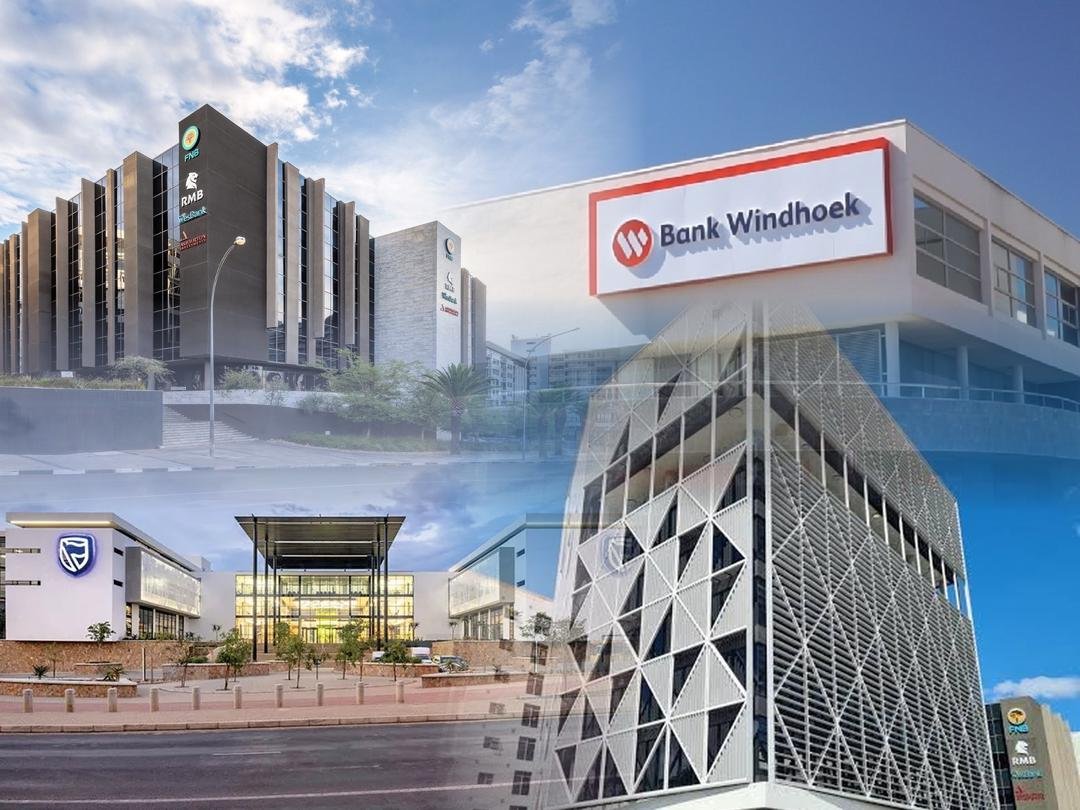
Four major banking groups now hold combined assets of N$203.8 billion, representing a substantial share of the country's economy. Yet behind this financial expansion lies a question that matters to ordinary people: is the growth translating into better access to finance, stronger small businesses, more jobs and improved economic opportunities?
According to the 2026 Banking Review Report by PSG Wealth Namibia, the combined assets of FirstRand Namibia, Capricorn Group, Standard Bank Namibia Holdings and NedNamibia Holdings increased by 13.4% year-on-year to N$203.8 billion by June 2026. Their assets were equivalent to 72.9% of Namibia’s gross domestic product, showing the banking sector’s considerable weight in the economy.
The banks also increased their gross advances, the total value of loans they had extended before deducting provisions for possible losses, by 9.6% to N$129.4 billion. PSG described this as the strongest annual lending growth in a decade. Customer deposits increased by 15%.
The figures indicate a banking sector with substantial financial resources and growing lending activity. But they do not, by themselves, show whether the additional money is reaching businesses and households that need finance to expand, invest or improve their living conditions.
FirstRand Namibia held the largest share of gross lending at 34.1%, equivalent to approximately N$44.15 billion. Capricorn Group followed with 32.4%, or about N$41.87 billion. Standard Bank Namibia Holdings accounted for 22.4%, representing approximately N$29.04 billion, while NedNamibia Holdings held 11.1%, or about N$14.37 billion.
The banks’ financial performances also differed. FirstRand Namibia increased its profit after tax by 12.2% to N$2.15 billion, while its return on equity reached 28.5%. NedNamibia reported a 23.7% increase in profit during the first half of its 2026 financial year. Standard Bank Namibia Holdings recorded deposit growth of 31.2% in its reported interim results. Capricorn Group’s attributable profit, however, declined by 6.1% to N$1.74 billion.
These results matter because profitable and financially stable banks are better positioned to protect customer deposits, provide payment services and continue lending. PSG reported that all four groups had capital adequacy ratios between 15.9% and 21.7%, above the regulatory minimum of 12.5%. Capital adequacy measures a bank’s financial buffer against potential losses.
However, the ability of banks to make profits and maintain strong capital positions must be considered alongside the public’s ability to access finance. The International Monetary Fund’s 2026 assessment identified access to finance as a continuing obstacle for small and medium-sized enterprises in Namibia. It said banks cited a shortage of bankable projects and inadequate collateral as key constraints, even though liquidity remained abundant.
Collateral is an asset, such as property, that a borrower offers as security for a loan. A bank may require it to reduce the risk of losing money if the borrower fails to repay. A bankable project is a business proposal that lenders consider sufficiently viable and capable of generating the income needed to repay financing.
This creates a difficult position for small businesses. A business may have customers, a workable idea and the potential to employ people, but without property or other acceptable security it may struggle to obtain a loan. The challenge is therefore not only whether banks have money available, but whether local businesses can meet the conditions required to access it.
PSG also found that banks had allocated a smaller proportion of their assets to loans over the past decade, while holding more cash and investments. This trend should not automatically be interpreted as banks refusing to lend. Banks are required to maintain liquidity to meet withdrawals and other obligations. Nevertheless, it raises a legitimate question about how financial resources can support productive economic activity while preserving the safety of the banking system.
For ordinary Namibians, the consequences are tangible. Small businesses need working capital to buy stock and equipment. Farmers need finance for irrigation, machinery and livestock. Families need affordable loans to purchase homes and meet major expenses. When viable borrowers cannot access finance, opportunities to expand businesses and create jobs can be lost.
The PSG report shows that Namibia’s banking sector is growing and remains well capitalised. The IMF assessment, however, highlights persistent barriers between available finance and the businesses that need it.