CONTINENTAL TRADE
AfCFTA Seeks to Improve African Market Access for Local Businesses
Namibia is seeking to make it easier for local businesses, particularly small and medium-sized enterprises, to access African markets by addressing information gaps and complicated trade procedures.
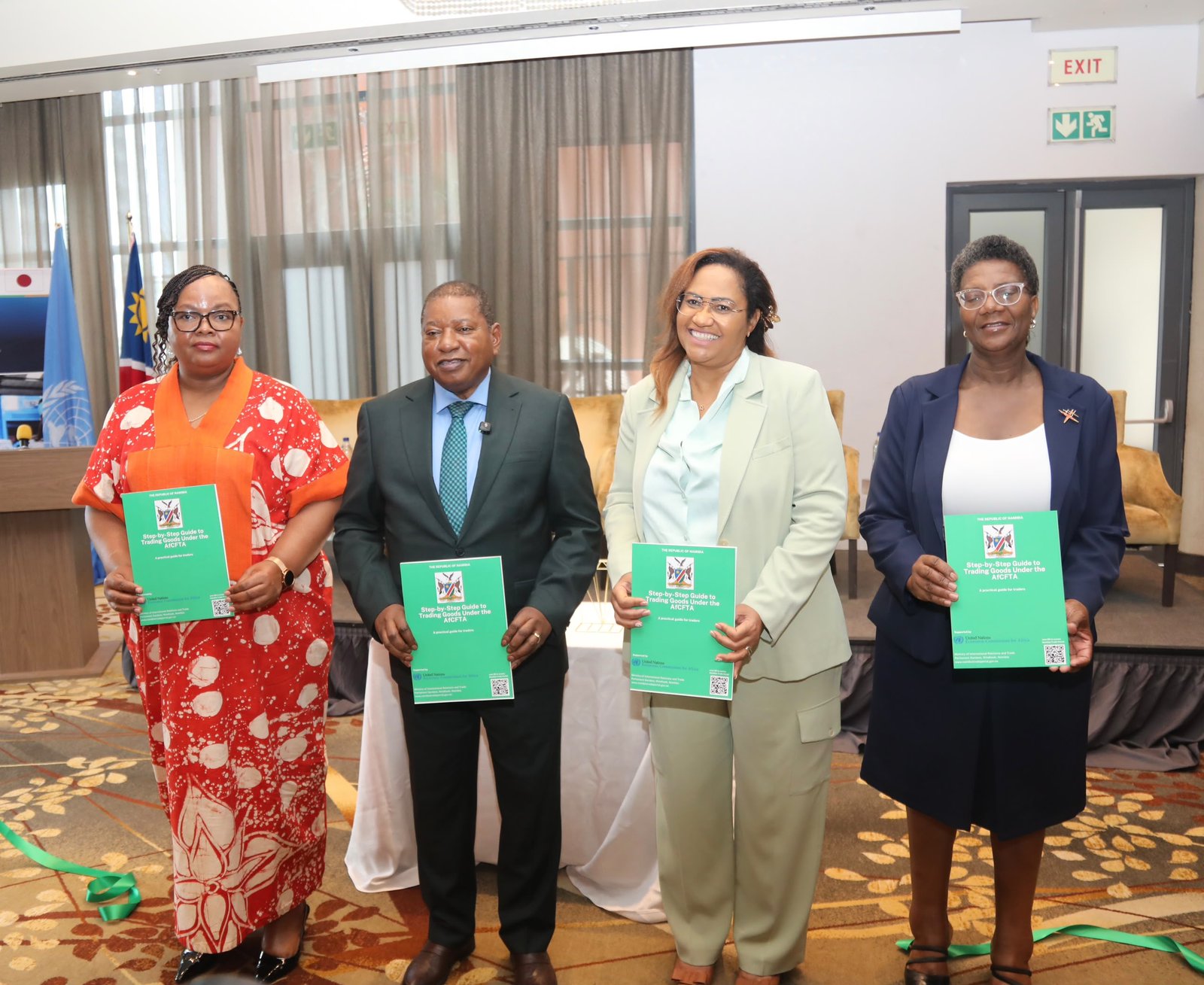
Namibia is seeking to address information gaps and complicated regulatory procedures that make it difficult for local businesses to access markets across the African continent under the African Continental Free Trade Area (AfCFTA).
Speaking at the official launch of the Namibia Step-by-Step Guide to Trading Goods under the AfCFTA in Windhoek on Monday, Executive Director of the Ministry of International Relations and Trade,Jerobeam Shaanika, said information on exporting and importing remained scattered across government institutions and regulatory agencies.
He stressed that this has created uncertainty for businesses, particularly micro, small and medium-sized enterprises (MSMEs), which often faced difficulties understanding documentation requirements, permits, customs procedures and product standards when seeking to enter other African markets.
"A small business in Namibia should not be excluded from continental trade simply because it lacks the resources to obtain information that ought to be readily accessible," Shaanika said.
Meanwhile, Director of the United Nations Economic Commission for Africa (ECA) Subregional Office for Southern Africa, Eunice Kamwendo, highlighted the need for African businesses to build their capacity to take advantage of preferential trade arrangements under the AfCFTA, including meeting export requirements and accessing new markets across the continent.
Namibia signed the AfCFTA Agreement in July 2018 and ratified it in January 2019 before launching its National AfCFTA Implementation Strategy in November 2022 to coordinate preparations for participation in the continental market.
The country has reached another milestone in June 2025 when it undertook its first export consignment to Nigeria under the agreement, demonstrating progress towards turning its trade commitments into commercial transactions, according the guide document.
In addition, Shaanika said the new resource was intended to reduce information gaps, improve predictability and strengthen compliance among businesses seeking to participate in intra-African trade.
He further encouraged established exporters, manufacturers, women-owned enterprises and young entrepreneurs to use the guide to identify opportunities and understand the procedures for trading across African markets.
The guide was developed with technical support from the ECA, particularly its Subregional Office for Southern Africa, while the Government of Japan provided financial support. Its development also involved consultations with government institutions, private sector representatives and other stakeholders, according to its quide document.
The guide brings together export and import procedures, documentation requirements, regulatory information and contact details of relevant public and private sector institutions, covering general and product-specific requirements and outlines procedures for selected products of economic importance to Namibia.