Home Market & Sectors Mining & Minerals
AGRICULTURAL TRADE
Namibia Among Africa’s Top Five Agricultural Importers At US$902 Billion
Namibia imported approximately US$902 million in agricultural products from African countries in 2025, placing it among the continent’s largest regional agricultural buyers and highlighting the economic importance of regional food supply chains.
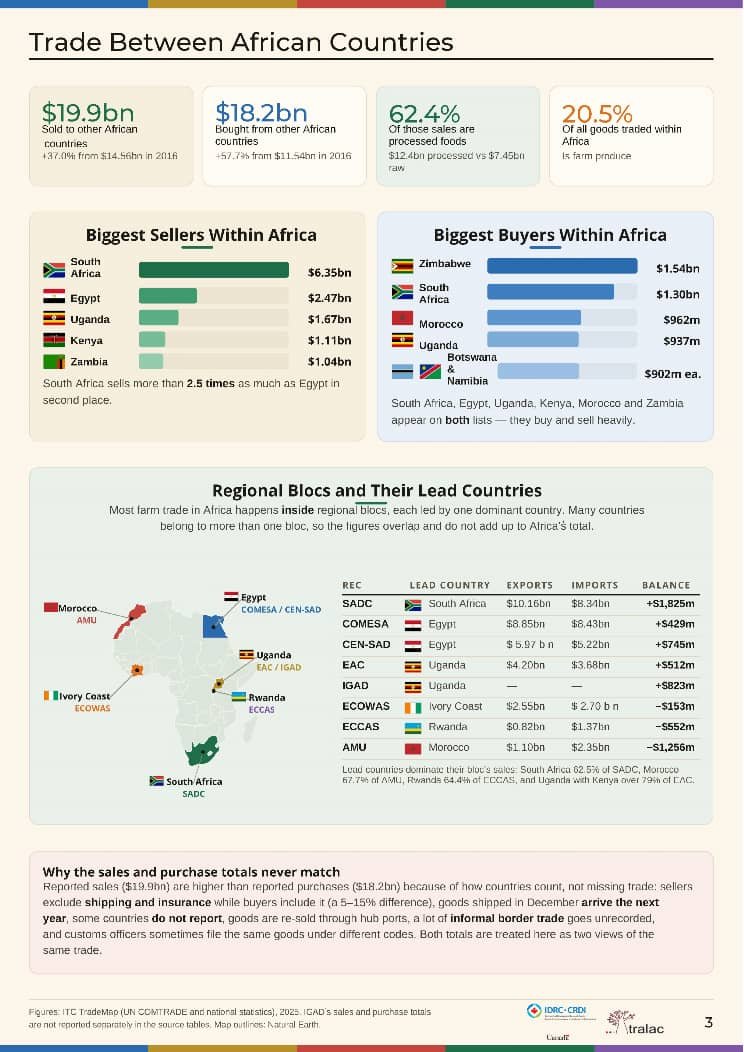
Namibia imported approximately US$902 million worth of agricultural products from other African countries in 2025, placing the country among the continent’s five largest regional agricultural importers and highlighting the importance of cross-border trade in meeting domestic agricultural demand.
According to the Trade Law Centre (tralac)`s agricultural trade infographic published in September, Namibia and Botswana each recorded agricultural imports valued at approximately US$902 million.
The figures place Namibia among Africa’s major buyers of agricultural goods from within the continent, underscoring the economic significance of regional markets for food supply, distribution and agricultural trade.
Namibia’s position also highlights the importance of strengthening domestic agricultural production and food processing to expand opportunities for local producers and businesses.
The report identified Zimbabwe as Africa’s largest buyer of agricultural products from other African countries, with imports valued at US$1.54 billion, followed by South Africa at US$1.30 billion.
Morocco recorded US$962 million in agricultural imports, while Uganda purchased goods worth US$937 million, placing Namibia and Botswana among the leading regional buyers.
Within the Southern African Development Community (SADC), agricultural exports reached US$10.16 billion in 2025, compared with imports of US$8.34 billion, resulting in a regional agricultural trade surplus of approximately US$1.83 billion.
South Africa dominated agricultural exports within the region, accounting for 62.5% of SADC’s agricultural sales.
For Namibia, regional agricultural trade provides access to products supplied through neighbouring markets, while presenting opportunities for local farmers, food processors and agricultural businesses to participate more actively in regional value chains.
The report further shows that agricultural trade between African countries has expanded over the past decade, with exports increasing by 37% from US$14.5 billion in 2016 to US$19.9 billion in 2025.
Imports between African countries also increased by 57.7%, rising from US$11.54 billion to US$18.2 billion over the same period.
Despite this growth, only 20.5% of Africa’s agricultural goods trade takes place within the continent, indicating considerable scope for expanding regional agricultural markets.
Processed agricultural products accounted for 62.4% of intra-African agricultural exports, valued at US$12.4 billion, compared with US$7.45 billion in unprocessed agricultural products.
This highlights the economic opportunities associated with agricultural processing and value addition, particularly for countries seeking to strengthen domestic production and expand their participation in regional trade.
The infographic also identifies customs clearance delays, transit fees, rules of origin and additional taxes as barriers affecting agricultural trade between African countries.
It recommends increasing food processing, strengthening agricultural sourcing within Africa and improving cross-border payment systems to reduce trade costs and support regional agricultural businesses.
For Namibia, the findings place agricultural production, value addition and regional market access at the centre of discussions about strengthening the country’s agricultural economy.