INSIGHT | ENERGY & POWER
Amutse Urges Electricity Suppliers to Make Electricity Affordable for Every Household
Energy minister challenges utilities, regulator and investors to show how digital innovation and new investment will lower electricity costs for ordinary households.
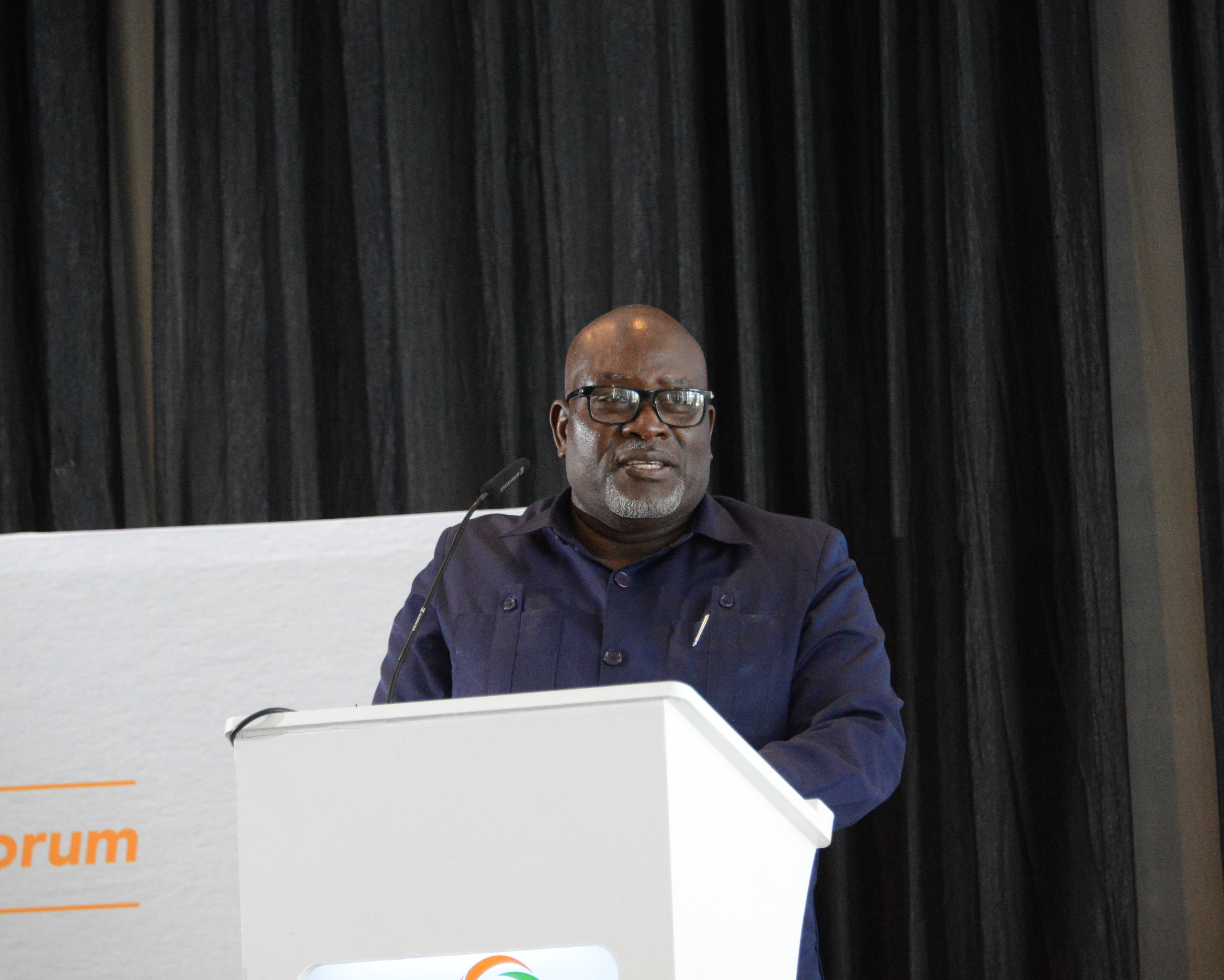
Minister of Industries, Mines and Energy, Modestus Amutse has challenged Namibia's electricity sector to demonstrate how its plans will make electricity more affordable for households.
The minister said this on Thursday during the Namibia Electricity Supply Industry Forum (NESIG 2026) discussion in Windhoek.
Amutse stressed that affordability must be at the centre of the forum's discussions.
"A household can be connected to the grid and still live in the dark," he said. "Our responsibility does not end at the meter."
Amutse further noted that an approved electricity tariff does not necessarily mean every household can afford to pay for power.
Referencing the Namibia Statistics Agency's 2015/16 Namibia Household Income and Expenditure Survey, he said 17.4% of the population lived below the upper-bound poverty line, while salaries and wages were the main source of income for 53.6% of households, cautioning that these figures are historical and do not reflect current household incomes.
The minister also raised concerns about prepaid electricity meters, noting that households can lose access to electricity when their credit runs out without a formal disconnection taking place.
"Low consumption may reflect efficiency. It may also reflect hardship," he said. "We need to know the difference."
He questioned the Electricity Control Board (ECB) on how it evaluates efficiency claims and measures the impact of tariff increases on low-income households.
The minister also challenged regional electricity distributors to account for their losses and explain clearly what customers receive when purchasing prepaid electricity.
Investors, meanwhile, were asked to demonstrate how their projects would affect the final cost of electricity.
Moreover, on digital innovation, Amutse said artificial intelligence and improved data systems could help reduce faults and electricity losses. However, he stressed that these improvements must translate into tangible benefits for consumers. "Show us the route from investment to the household," he said.
Amutse further acknowledged that government must address situations where households cannot afford basic electricity, even when supply is efficient.
He said regulators and distributors could not resolve low household incomes through tariffs alone, adding that any support measures must be targeted and transparently funded.
"An unfunded promise does not protect a household," he said.
He also called for a common method of measuring the cost of basic household electricity across different income levels, arguing that a national average tariff alone does not adequately show the burden on households, saying he wants progress on these commitments reported at the next forum.
The forum was hosted under the theme "Driving Affordable Energy Transformation Through Digital Innovation, Collaboration and Investment".