Home Market & Sectors Banking & Finance
ECONOMIC INSIGHT | NATIONAL BUDGET
Govt Seeks Extra N$700m Mid-Year Budget Top-Up
The government wants to raise the 2026/27 budget from N$87.9 billion to N$88.6 billion to cover urgent needs, after weaker growth cut expected revenue by N$1.5 billion.
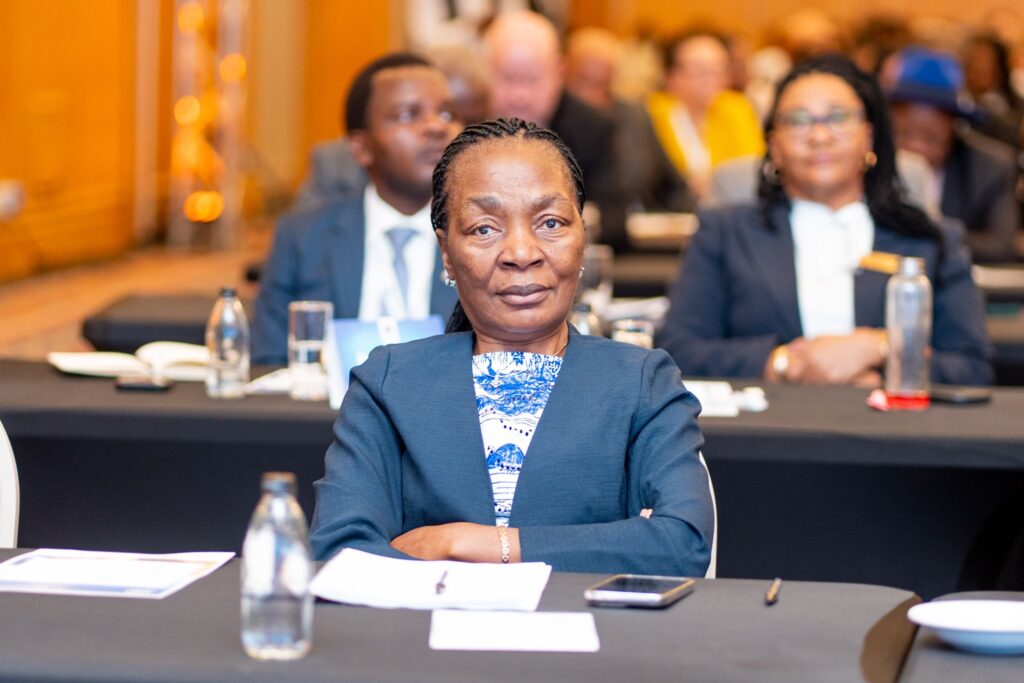
The government is seeking to increase the 2026/27 budget from N$87.9 billion to N$88.6 billion, following a lower economic growth outlook and a N$1.5 billion cut in projected revenue at the end of 2026.
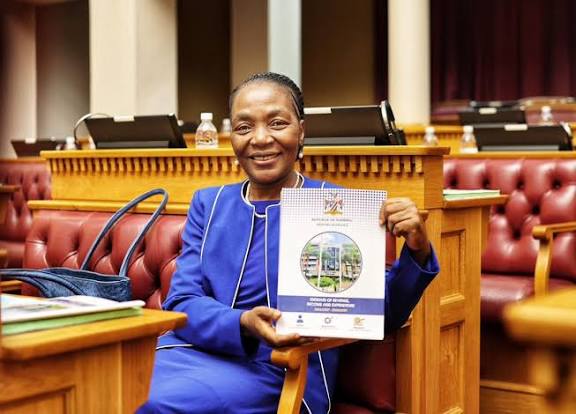
Speaking during the mid-year budget review presentation in the National Assembly on Thursday, Finance Minister Ericah Shafudah explained that the review gave government a chance to assess implementation and adjust resources so that government remains on course to achieve its planned development priorities.
“The Mid-Year Budget Review process provides us with an opportunity to improve the effectiveness of resource allocation by taking stock of the implementation of the National Budget so far, making the requisite adjustments,” Shafudah outlined.
She indicated that government proposed the readjustment of existing Vote ceilings and the reallocation of available resources within and between votes to meet the funding needs, noting that the adjustments followed a downward revision of the economic growth outlook and revenue by N$1.5 billion.
The biggest request is for the Finance Vote, which would get an extra N$665 million, Shafudah reported, with N$535 million earmarked for the Public Service Employees Medical Aid Scheme (PSEMAS) and N$130 million to replenish the Contingency Fund.
Shafudah clarified that the Appropriation Amendment Bill would increase the total budget appropriation from N$87.9 billion to N$88.6 billion, describing it as a “modest upward adjustment.”
Turning to Defence, Shafudah announced that the ministry would receive N$200 million, split equally between rations and utilities, with N$100 million allocated to each.
Meanwhile, Shafudah revealed that the President’s Vote would get N$180 million, including N$140 million for basic sports facilities under the coordination and supervision of Regional Governors, while N$40 million would strengthen security measures.
She emphasised that moving the sports funding from the Sport, Youth and National Service Vote was intended to ensure “streamlined implementation, enhanced accountability, and expedited delivery.”
Shafudah outlined that the Ministry of Agriculture and Land Reform would also receive N$179 million for “the containment and management of the outbreak of Foot-and-Mouth Disease.”
She added that the money would come from a 2% cut in the expenditure ceilings of all Offices, Ministries and Agencies, explaining that the funding was mobilised through “the two percent (2%) reduction applied to the expenditure ceilings of all OMAs.”
Furthermore, Shafudah highlighted that the Ministry of Urban and Rural Development had been allocated N$62 million, including N$50 million for urgent soil erosion mitigation works in Rundu, Kavango East Region, and N$12 million to fund the 5% salary adjustment for regional councillors.
For the Ministry of Works and Transport, Shafudah indicated that N$50 million would be provided to “meet outstanding State property rental obligations.”
She added that the Office of the Prime Minister would be allocated N$26 million to settle outstanding drought relief invoices.
Shafudah said that the Ministry of Health and Social Services would receive N$41 million “to cater for 456 medical and dental interns.”
She further explained that the Ministry of Gender Equality and Child Welfare would get N$12.9 million, of which N$5 million would “sustain the National Sanitary Pad Initiative for vulnerable learners,” while the balance would fund early childhood development educators’ allowances.
Shafudah detailed that the Judiciary would receive N$28.5 million to meet “critical operational requirements,” including transport, utilities, salary adjustments for prosecutors, judges and magistrates, and security measures for magistrates.
Additionally, she outlined that the Ministry of Justice would get N$16 million, comprising N$13 million for the ongoing expansion of the ministry’s head office and N$3 million for “essential operational requirements.”
Shafudah disclosed that the Anti-Corruption Commission would also receive N$2.4 million for “essential tools of trade.”
On parliamentary oversight, Shafudah reported that Parliament would get N$13 million, with N$9 million for the National Assembly and N$4 million for the National Council “to strengthen parliamentary oversight.”