Home Market & Sectors Banking & Finance
Budget Review
Namibia Cuts Revenue Forecast by N$1.5 Billion as Diamond Taxes Fall
Namibia has reduced its revenue forecast for the 2026/27 financial year by N$1.5 billion, as weaker mining receipts and declining diamond income add pressure to public finances.

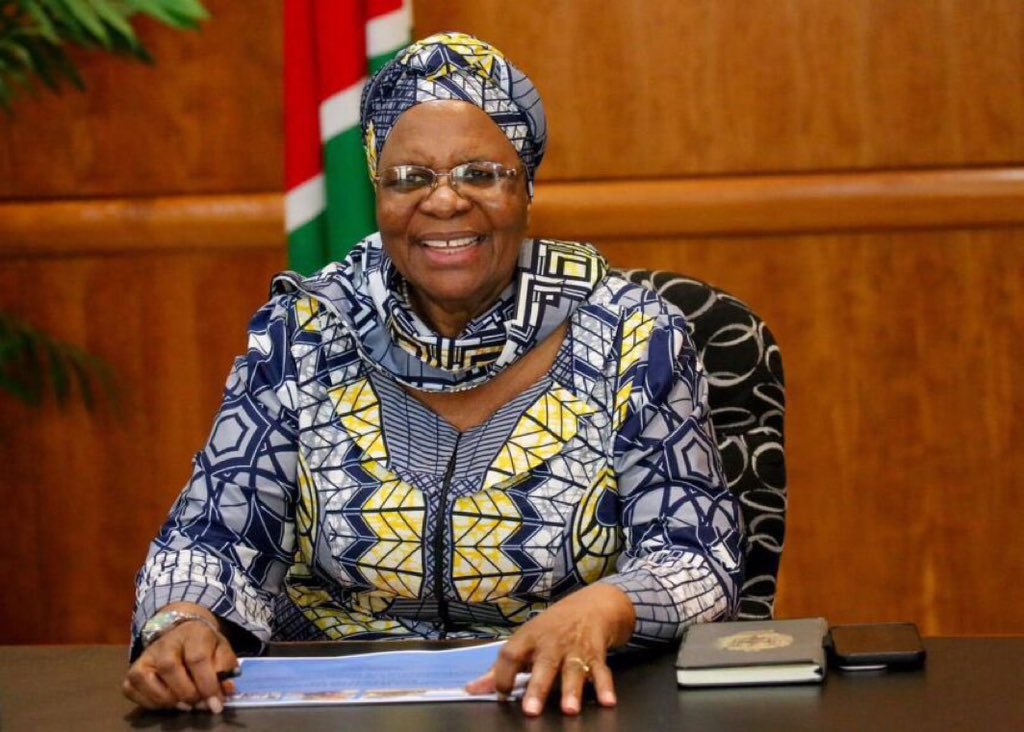
The Minister of Finance, Ericah Shafudah has called for accelerated economic diversification after revising Namibia’s revenue forecast downward by N$1.5 billion, warning that the country’s dependence on commodity income leaves government finances exposed to declining mineral receipts.
Presenting the 2026/27 mid-year budget review in the National Assembly on Thursday, Shafudah reduced the revenue estimate from N$89.6 billion to N$88.1 billion, attributing the adjustment mainly to lower mining receipts, reduced fuel levies and lower administrative fees.
“Mining revenue remains the main source of weakness,” Shafudah said in the review, as she outlined the pressure on government income from declining mineral receipts.
Mining company taxes and royalties have been revised downward to N$5.2 billion from N$6.1 billion, while non-tax revenue has been cut from N$6.1 billion to N$5 billion, mainly due to lower mineral royalties and public enterprise dividends.
The minister reported that diamond taxes and royalties had fallen from N$5.8 billion in the 2023/24 financial year to a projected N$414 million in 2026/27, with the review estimating a shortfall of N$5.3 billion over the 2024/25 to 2026/27 medium-term period.
She noted that government had supported the diamond sector through royalty relief measures intended to protect employment and export earnings, but stressed the need to broaden the country’s economic base.
“Continued reliance on commodity-based revenue highlights the importance of accelerating economic diversification through expanded agricultural production, downstream value addition, growing services industries and the development of renewable energy industries,” she said.
Shafudah also announced that Namibia’s economic growth forecast for 2026 had been lowered to 2.3%, compared with the 3.1% projected in the main budget, however the revised estimate remains above the 1.7% growth recorded in 2025.
“The revision reflects slower-than-expected performance in the first half of 2026,” she said.
The economy is projected to grow by 2.6% in 2027, 3% in 2028 and 3.3% in 2029, supported by mining projects in the pipeline, strong uranium and gold prices, and improved domestic consumption as inflation and interest rates ease.
However, the minister identified subdued global demand, weaker commodity prices, high fuel prices, the anticipated El Niño weather phenomenon and the foot-and-mouth disease outbreak as risks to the outlook.
On public spending, Shafudah reported that actual expenditure and commitments had reached N$47 billion by 30 September 2026, against an appropriation of N$87.9 billion, representing a budget execution rate of 53.5%.
Development expenditure, including commitments, recorded an execution rate of 42%, while operational expenditure reached 53%.
The revised fiscal framework projects a budget deficit of N$16.3 billion, equivalent to 5.5% of gross domestic product (GDP).
She emphasized that public debt is projected to reach N$201.7 billion, or 68.7% of GDP, while interest payments are expected to total N$15.4 billion, absorbing 17.5% of government revenue.
Shafudah said government would continue pursuing fiscal consolidation to reduce borrowing costs and stabilise public debt, while prioritising projects ready for implementation and those supporting national development objectives.
The review also sets out plans to complete the Medium-Term Revenue Strategy and Debt Management Strategy before February 2027, as government seeks to strengthen revenue collection and manage its borrowing obligations.