ENERGY
Rural Electricity Access Remains a Challenge in Namibia
Only 35.2% of Namibia’s rural population has access to electricity, compared with 78.8% in urban areas, highlighting the gap in access to modern energy services.
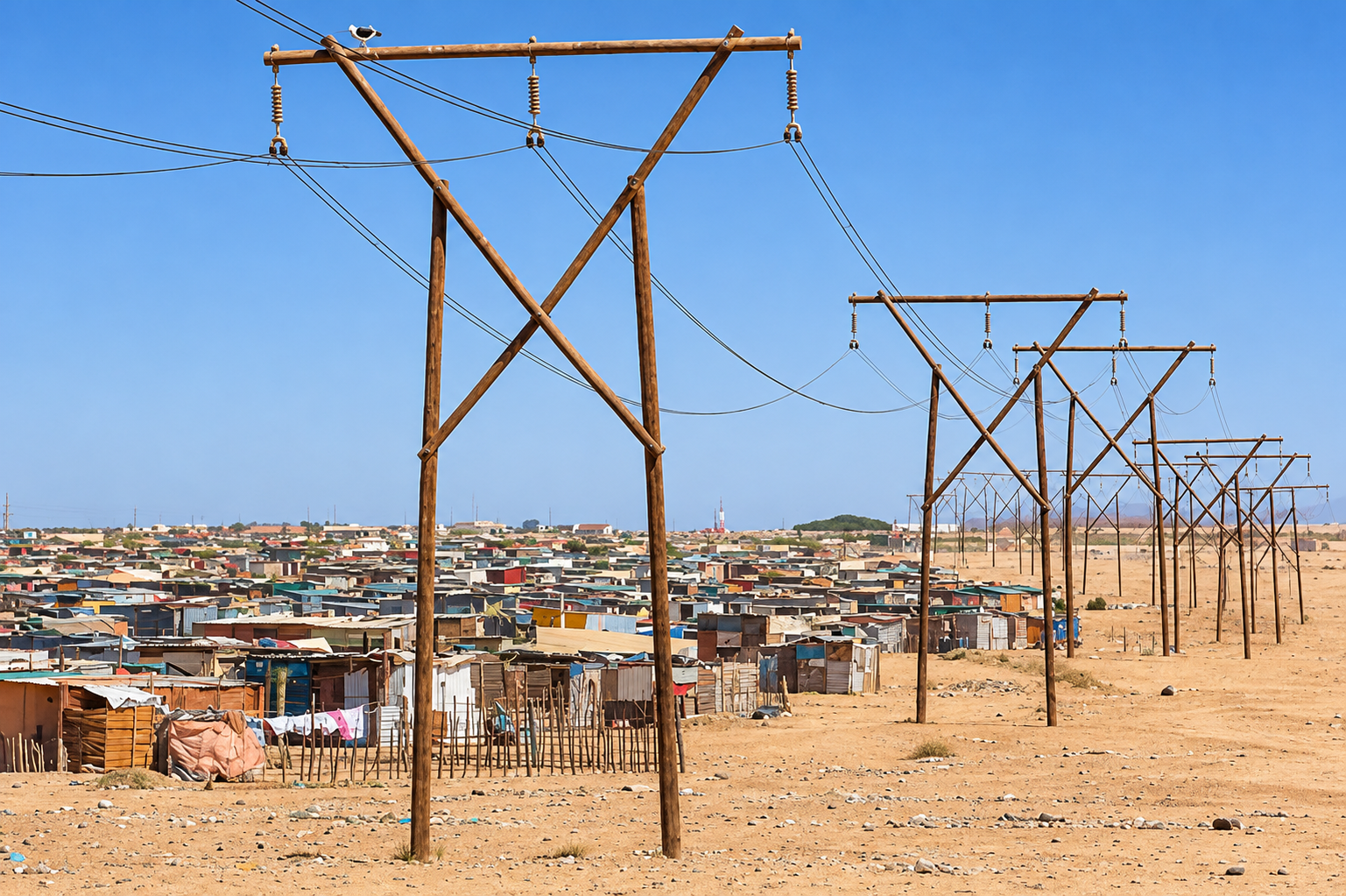
Namibia’s rural population continues to face challenges in accessing electricity, with only 35.2% having access to electricity, compared with 78.8% of the urban population, according to the Namibia Statistics Agency’s (NSA) 2025 Sustainable Development Goal (SDG) Indicator Framework.
The findings were released following the NSA’s launch of the framework on Wednesday, drawing on data from the 2023 Population and Housing Census on electricity access across the country.
The figures show a 43.6 percentage-point difference between rural and urban electricity access, highlighting the difficulty of extending electricity services to rural communities.
The impact of limited electricity access also extends to economic activity in informal settlements, where small businesses, traders and households face difficulties operating without reliable power.
Speaking to Business Pulse 360°, Community Activist, Sem David said limited electricity access makes it difficult for small businesses to expand, while aspiring entrepreneurs are often unable to start businesses that depend on electricity.
“Without reliable electricity, people have fewer opportunities to earn an income, grow businesses, study effectively, and improve their quality of life,” David said.
He said families in informal settlements also face difficulties preserving food because they do not have refrigerators.
“Families may have to buy meat and other food for immediate consumption because they cannot keep it fresh in a refrigerator,” he said.
David said limited electricity access slows economic growth and deepens poverty by restricting people's ability to create jobs, add value to their products and build sustainable livelihoods.
“Electricity is essential infrastructure, not a luxury,” he said.
He urged government and other leaders to make reliable and affordable electricity a priority in rural communities and informal settlements, calling for practical solutions to expand access.
However, SDG 7 has called for universal access to affordable, reliable and modern energy services by 2030, placing rural electricity access among the areas Namibia needs to address to meet the target.
The NSA stated that reliable, timely and high-quality statistics are necessary to monitor progress towards the SDGs and identify data gaps.