Home Market & Sectors Agriculture & Oceans
AGRICULTURE AND OCEANS
NFCPT Board Urged to Expand Fish Access and Unlock Community Economic Opportunities
The newly inaugurated board has been tasked with ensuring that Namibia's marine resources benefit communities across the country through affordable fish distribution, community markets and employment creation.
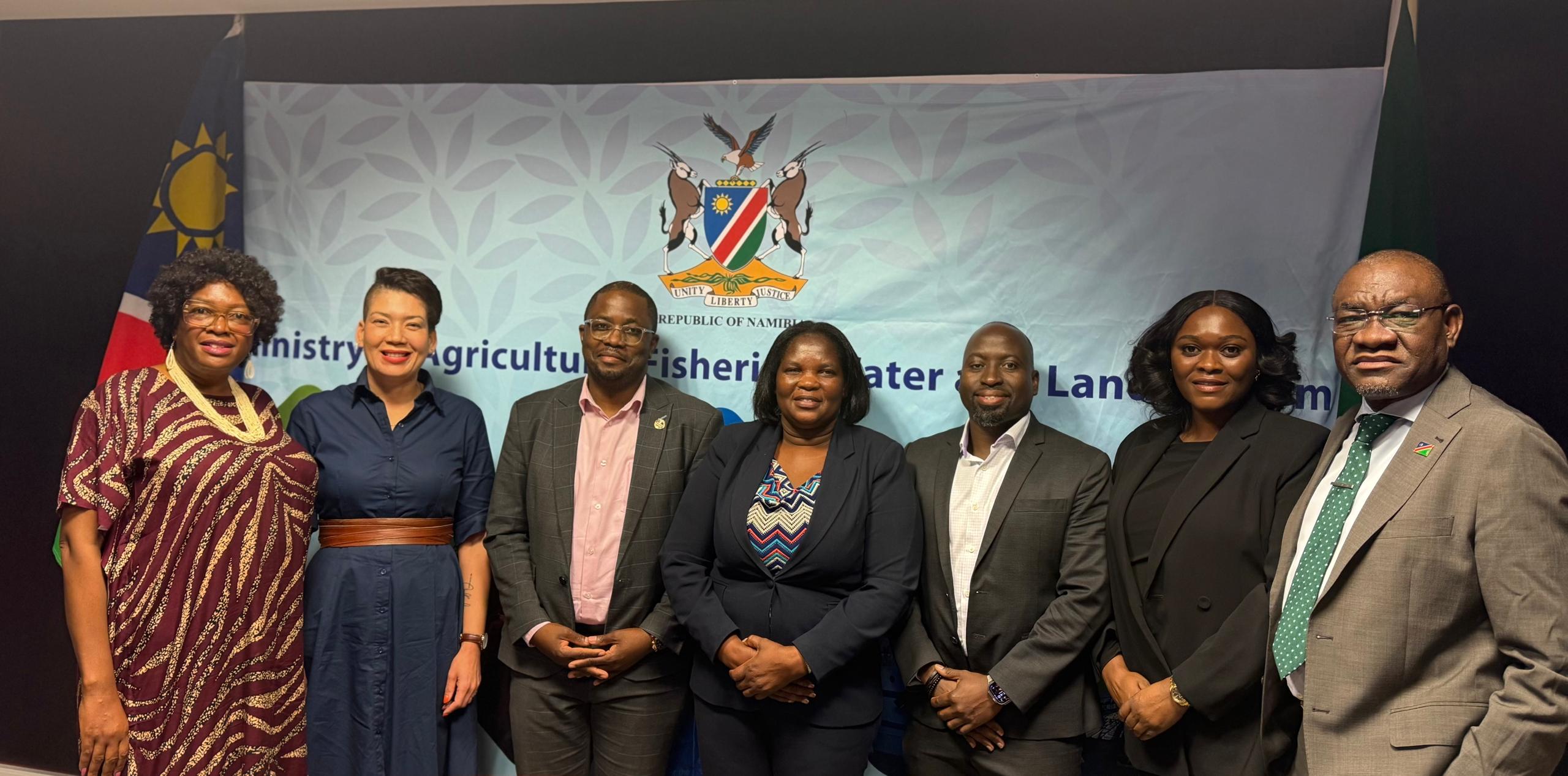
The newly inaugurated Board of Trustees of the Namibian Fish Consumption Promotion Trust (NFCPT) has been urged to expand access to affordable fish across the country to ensure that Namibia's marine resources contribute more directly to household welfare and local economic development.
Deputy Minister of Agriculture, Fisheries, Water and Land Reform Ruthy Masake said the Trust must ensure that the benefits of the country's fisheries resources reach all Namibians, regardless of their geographical location or economic circumstances.
Speaking at the inauguration of the board in Windhoek, Masake said increasing domestic fish consumption was important for improving nutrition, strengthening food security and supporting economic empowerment.
"Fish is an important source of protein and essential nutrients. Increasing domestic fish consumption can contribute to improved nutrition, healthier communities and greater food security," she said.
Masake said the Trust should strengthen domestic distribution networks and explore cost-effective ways of transporting, storing and distributing fish, particularly to inland and underserved communities.
She tasked the board with prioritising the establishment of at least three community fish markets during its tenure, subject to feasibility assessments, available resources and proper implementation planning.
"Such an initiative would not only bring affordable fish closer to consumers, but could also create employment opportunities, stimulate local economic activity and strengthen the contribution of the fisheries sector to community development," she said.
The proposed markets are expected to be developed in collaboration with regional councils, local authorities, communities and other stakeholders to ensure they respond to local needs.
Masake also called for stronger partnerships between the Trust, the fishing industry, retailers and community organisations to build a more inclusive domestic fish market.
Masake further emphasised the importance of good corporate governance, accountability and financial sustainability, saying the board must ensure that public resources are managed responsibly and that the Trust delivers measurable benefits to communities.
The five-member board, inaugurated for a five-year term, is chaired by Lot Ndamonomhata and includes Charlene Hartung, Olivia Shuuluka, Wilfried Naibab and Ndahalomwene Gotlieb.
Ndamonomhata said the board had accepted the responsibility of improving the Trust's operations while balancing financial sustainability with affordable fish for consumers.
"We are therefore committing to pursuing financial sustainability alongside affordability, as you indicated, with the hope of returning to breaking even if not a surplus also," he said.
He said the board would also work with small vendors and entrepreneurs to extend fish distribution to underserved communities, creating opportunities along the fisheries value chain.
"That is a priority, to create that value chain and to be able to create jobs," he said.
Ndamonomhata also acknowledged the financial challenges facing the Trust, including rising harvesting costs, operating expenses and competition from cheaper fish imports. He cited a N$19 million deficit recorded in 2024, which he attributed to these pressures.
The board is expected to work with the Ministry and NFCPT management to strengthen partnerships, improve distribution and extend the benefits of Namibia's fisheries resources to more communities.