CLIMATE FINANCE
Namibia targets US$14 billion in climate investment by 2035
The government is seeking international investors and development finance partners to support 72 climate measures across 13 sectors, with renewable energy, green hydrogen and climate-resilient infrastructure identified as key areas for investment and economic diversification.
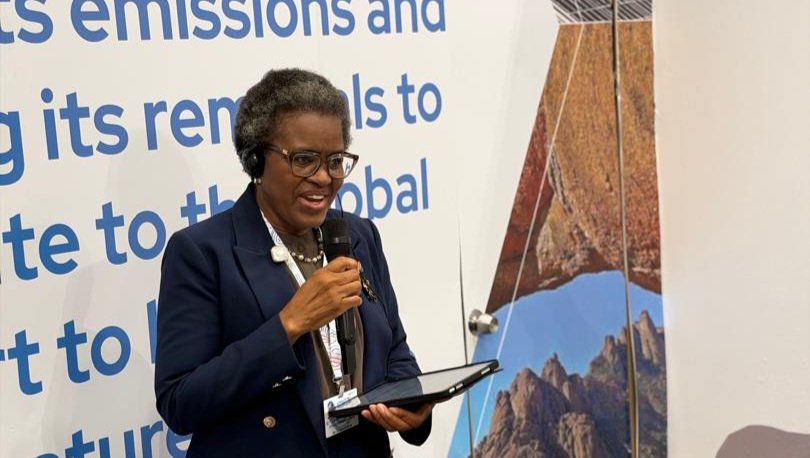
Namibia is targeting an estimated US$14 billion , approximately N$231 billion in climate-related investment by 2035, as the government seeks to mobilise private investors, development finance institutions and international partners to fund renewable energy, green hydrogen and climate-resilient infrastructure projects.
The investment pathway forms part of Namibia's 3rd Nationally Determined Contribution (NDC 3.0), which outlines 72 measures and 216 actions across 13 sectors, Environment and Tourism Minister, Indileni Daniel said during the official opening of the Namibia Pavilion at COP31 in Antalya, Türkiye, on Tuesday.
Daniel said the investment plan was intended to translate the country's climate commitments into infrastructure, projects, employment opportunities and more resilient communities.
She described the investment pathway as both a climate commitment and an opportunity to diversify Namibia's economy through new industries and productive investment.
"Namibia is a country of extraordinary natural assets, abundant sunshine, strong wind resources, rich biodiversity and vast landscapes. We are determined to harness these assets responsibly to advance the energy transition and to diversify our economy, build new industries and create opportunities for our people," Daniel said.
She said Namibia was pursuing renewable energy and green hydrogen development while also investing in climate-resilient agriculture, water security, biodiversity conservation, sustainable land management and community-based natural resource management.
According to Daniel, the government wants these investments to generate local economic value through stronger domestic businesses, skills development, technology transfer and decent employment opportunities, particularly for young people and women.
She said the country's participation at COP31 was aimed at establishing partnerships with investors, development finance institutions, climate funds, technology providers, research institutions and implementation partners.
"We have not travelled from Namibia to Antalya to merely participate in discussions. We are here to build partnerships and advance practical cooperation," she said.
Daniel said the government wanted to identify bankable projects, develop innovative financing structures and turn climate commitments into investments on the ground.
She encouraged members of the Namibian delegation to use the pavilion as a platform to showcase credible projects, engage potential investors, exchange technical knowledge and advance financing discussions.
The minister said the desired outcomes included stronger partnerships, clearer project-development pathways and practical cooperation that could continue after the conference.
Daniel also highlighted the economic risks associated with climate change, saying recurring droughts, floods and rising temperatures were placing pressure on water resources, food systems and livelihoods.
She said these impacts were particularly severe for rural communities whose livelihoods depend directly on land, water and natural resources.
For Namibia, she said, climate change was not only an environmental concern but also a serious development challenge requiring investment in adaptation and resilience.
Daniel further emphasised that investment must be environmentally and socially responsible, inclusive and aligned with the needs of communities.
"Our message to the international community is straightforward, Namibia is ready to work with partners," she said, adding that the country welcomed investment that could support productive industries, resilient livelihoods, local enterprise and skills development.
The Namibia Pavilion was officially opened during COP31 to serve as a meeting point for government, business, investors, development partners, academia and civil society to advance environmental partnerships and investment opportunities.