Home Market & Sectors Banking & Finance
N$505 billion needed for Development as Government Looks to Pension Funds
Namibia needs approximately N$505 billion to achieve its development ambitions under the Sixth National Development Plan (NDP6) and advance the country's Vision 2030 objectives, with Government increasingly looking towards domestic institutional investors and pension funds to help finance the country's development priorities.
Approximately N$505 billion is needed to achieve Namibia’s development ambitions under the Sixth National Development Plan (NDP6) and advance the country's Vision 2030 objectives.
Government is increasingly looking towards domestic institutional investors and pension funds to help finance the country's development priorities.
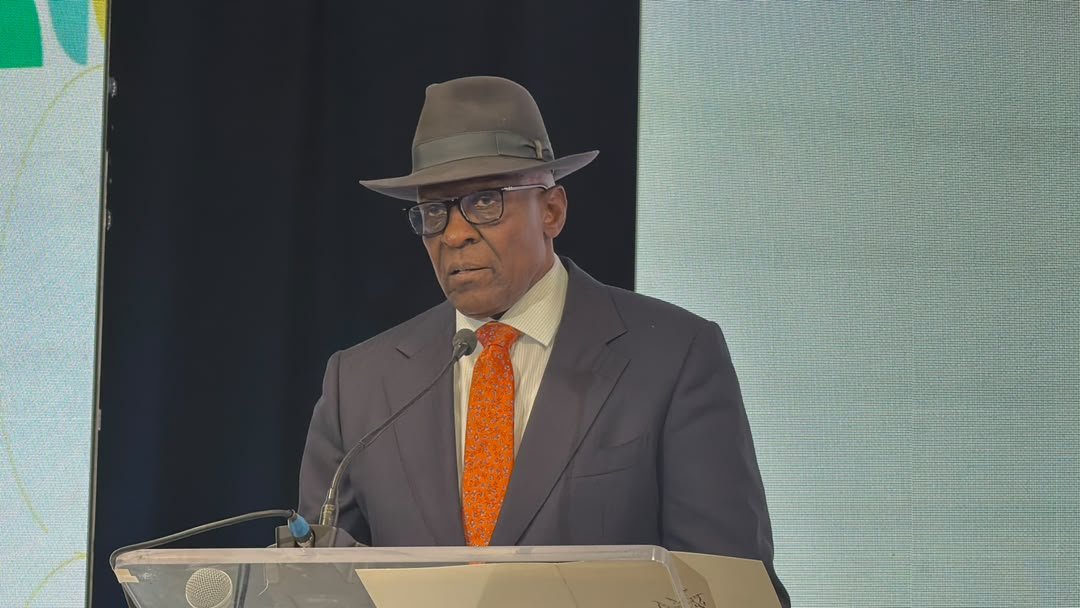
The National Planning Commission (NPC) Director General, Kaire Mbuende said financial institutions collectively hold approximately N$400 billion, presenting an opportunity for domestic capital to play a greater role in financing national development.
Speaking at the Government Institutions Pension Fund (GIPF) Pension and Investment Symposium 2026 on Wednesday, Mbuende said investing even half of the capital held by these institutions in national development priorities could make a significant contribution towards closing the country's financing gap.
"If you were to invest even half of that capital in our national development priorities, we would go a long way," he said.
He added that foreign direct investment and Government financing would help cover the remaining funding requirements.
The figures highlight the potential role of domestic institutional capital in supporting Namibia's development agenda, particularly as Government seeks to mobilize financing beyond traditional public funding.
Mbuende emphasized that the challenge is not simply whether money exists, but whether available capital can be channeled effectively into viable projects capable of delivering economic and social returns.
Under NDP6, Government has identified several strategic sectors requiring investment, including green hydrogen and renewable energy, oil and gas, logistics and transport infrastructure, water security, agriculture and irrigation, as well as mining beneficiation and critical minerals.
These sectors are expected to support economic transformation, strengthen productive capacity and create opportunities for employment and business development.
The NPC Director General argued that infrastructure investment should go beyond constructing physical assets and instead focus on unlocking wider economic activities.
He pointed out that improved ports could expand trade, railways could strengthen supply chains for mining and manufacturing, while water infrastructure could support agricultural and industrial development.
For pension funds and other institutional investors, this presents an opportunity to participate in financing projects that could contribute to the country's long-term economic growth.
However, attracting such investment requires more than identifying opportunities. Mbuende acknowledged that investors need confidence in the projects they finance, including appropriate risk-sharing arrangements and effective project preparation.
He said Government is placing greater emphasis on blended finance, project preparation facilities, guarantees, development finance instruments and strategic partnerships to encourage private sector participation.
Under these arrangements, investment risks can be shared between Government, private investors and development finance institutions rather than being carried by one party alone.
Mbuende also highlighted the importance of improving coordination between Government institutions, saying investors should not have to navigate multiple institutions independently when pursuing investment opportunities.
The Namibia Public-Private Forum, established under the leadership of President Netumbo Nandi-Ndaitwah, was identified as one of the mechanisms intended to strengthen cooperation between Government and the private sector.
The forum provides a platform for identifying investment constraints, advancing solutions and improving the competitiveness of the economy.
With Vision 2030 now only four years away, Mbuende maintained that Namibia's development ambitions remain achievable, provided available resources, capital and skills are directed towards productive investments.
He called on institutional investors, financiers and strategic partners to move beyond discussions and engage with Government on specific projects, financing requirements and implementation arrangements.
The central challenge, he said, is to turn Namibia's identified investment opportunities into financed projects, stronger enterprises and employment opportunities for Namibians.