Home Market & Sectors Banking & Finance
Shafudah Calls for More Financial Crime Prosecutions, Asset Recovery
Namibia must move beyond compliance with international financial crime standards and demonstrate measurable results in investigations, prosecutions and the recovery of criminal assets
Minister of Finance and Public Enterprise, Erica Shafudah is calling on Namibia to move beyond compliance with international financial crime standards and demonstrate measurable results in investigations, prosecutions and the recovery of criminal assets.
Speaking at the inaugural Namibia Anti-Money Laundering and Combating the Financing of Terrorism (AML/CFT) Conference this week, Shafudah said financial integrity is directly linked to economic development, governance and national security.
“AML/CFT Compliance is a matter of financial integrity, which makes it an economic issue. It is a governance issue, it is a national security issue and ultimately, it is a national development issue,” she said.
The two-day conference, hosted by the Financial Intelligence Centre (FIC) in Windhoek, brought together policymakers, regulators, law enforcement agencies, prosecutors, financial institutions and other stakeholders to strengthen Namibia’s response to financial crime.
Shafudah’s message comes after Namibia’s exit from the Financial Action Task Force (FATF) grey list. While the milestone reflected progress in strengthening the country’s anti-money laundering framework, she said the next phase must focus on whether reforms produce practical results.
“When criminal proceeds can move freely through the legitimate economy, the consequences do not remain within our banks, our regulators or law-enforcement agencies,” she said.
She warned that financial crime affects public revenue, distorts competition, weakens institutions and damages investor confidence, while diverting resources from legitimate economic activity and government priorities.
Former FIC Director, now Director General of the Anti-Corruption Commission, Bryan Eiseb said Namibia’s removal from the grey list resulted from collaboration, leadership, technical expertise and national responsibility. However, he questioned why countries should wait for external assessments before strengthening their systems.
“The conversations that strengthen our AML/CFT/CPF framework should not begin when external pressure arrives, nor should they end upon completion with an Action Plan or the delisting of our Country,” Eiseb said, urging Namibia to prepare for risks even during periods without external pressure.
He described sustainability as the country’s next challenge, saying the commitment and coordination that supported removal from the list must continue. He also called for public and private institutions to move beyond occasional cooperation towards a lasting partnership based on trust, transparency, mutual respect and shared accountability.
“The greatest threat to effective AML/CFT systems is not a lack of expertise. It is complacency, isolated and siloed institutional mandates,” Eiseb said
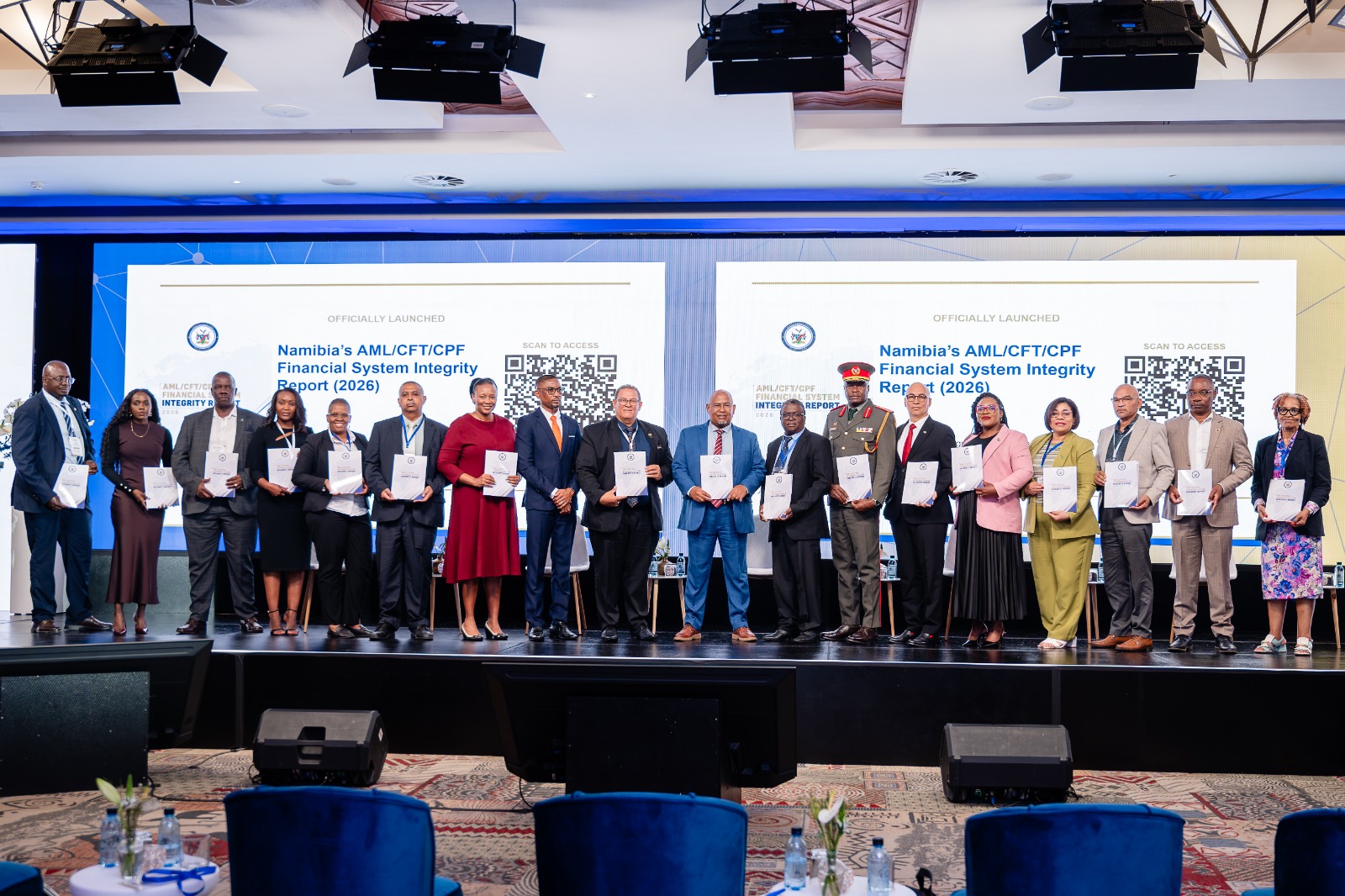
The conference also saw the launch of Namibia’s first AML/CFT/CPF Financial System Integrity Report, which assesses financial crime risks, progress in strengthening the national framework and areas requiring further action.
According to the FIC’s post-conference media information pack, corruption, fraud and cybercrime were identified as very high financial crime risks.
The report also highlights challenges involving beneficial ownership verification, digital fraud investigations, specialist skills and outdated technological systems.
Survey feedback from conference participants showed unanimous support among respondents for a structured public-private partnership to improve information-sharing.
The practical arrangements, implementation timeline and accountability measures for such a partnership remain important questions.
In closing, the finance ministry called for government to provide sound legislation, capable institutions, adequate resources, skilled personnel and clear priorities. International cooperation through regional and global bodies remains important as financial crime crosses national borders.