Home Market & Sectors Mining & Minerals
ECONOMY
N$5.3 Billion Diamond Revenue Shortfall Puts Pressure on State Finances
Namibia’s projected diamond tax and royalty shortfall over the 2024/25 to 2026/27 medium-term period highlights the risks of relying on mineral income, as declining mining receipts contribute to a N$1.5 billion downward revision in government revenue.
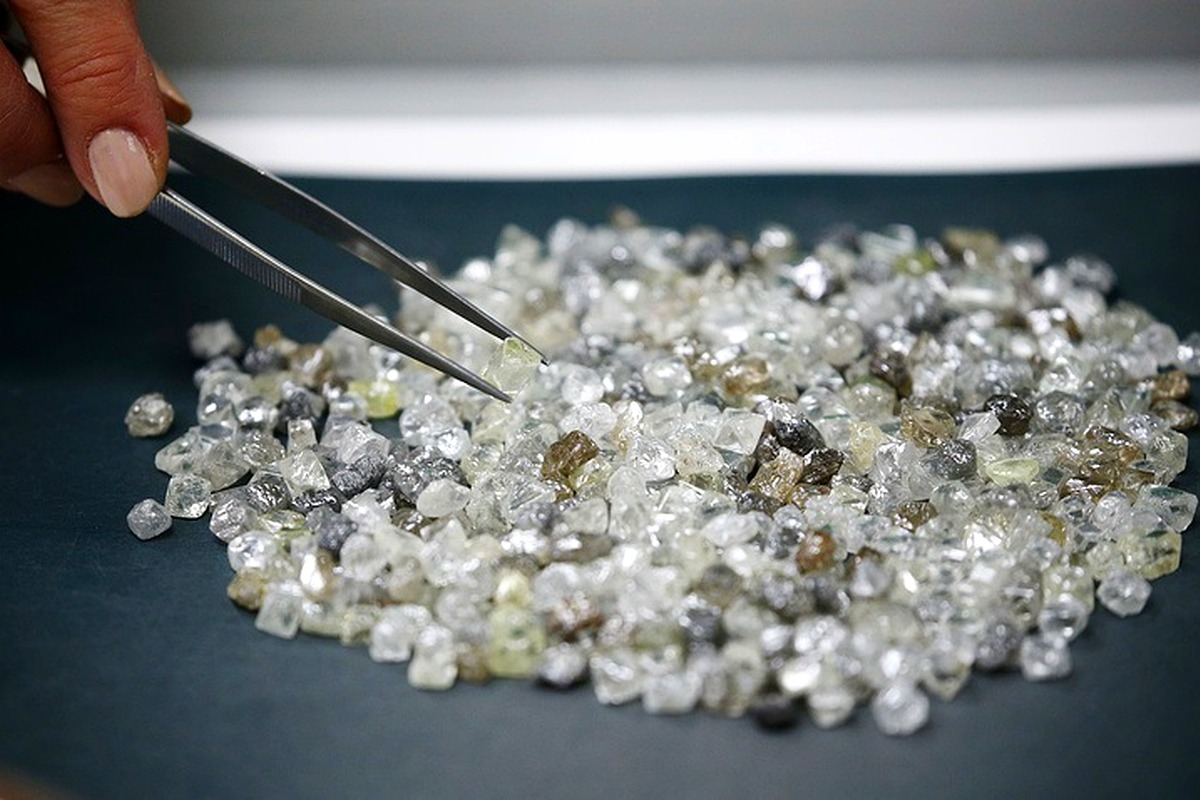
Namibia’s declining diamond revenue is putting pressure on government finances, with an estimated N$5.3 billion shortfall in diamond taxes and royalties over the 2024/25 to 2026/27 medium-term period.
In the 2026/27 Mid-Year Budget Review Statement, Minister of Finance Ericah Shafudah said projected government revenue had been revised down by N$1.5 billion, from N$89.6 billion to N$88.1 billion. The reduction is mainly due to lower mining receipts, reduced fuel levies and lower administrative fees.
“Mining revenue remains the main source of weakness,” Shafudah said in the statement.
Mining company taxes and royalties are now projected at N$5.2 billion for the 2026/27 financial year, down from the original estimate of N$6.1 billion. Diamond taxes and royalties have also declined sharply, from N$5.8 billion in the 2023/24 financial year to a projected N$414 million in the 2026/27 financial year.
The decline highlights how fluctuations in the mining sector can affect the money available to government for public services, infrastructure and development programmes. Lower revenue can make it more difficult to fund spending priorities without adjusting the budget or finding alternative sources of income.
The revenue pressure comes as Namibia’s economic growth outlook has weakened.
According to the minister, government revised its 2026 growth forecast down to 2.3%, from 3.1% projected in the main budget, although this remains above the estimated 1.7% growth recorded in 2025.
Shafudah said Namibia’s dependence on commodity-related revenue made economic diversification increasingly important.
“Continued reliance on commodity-based revenue highlights the importance of accelerating economic diversification,” she said, pointing to expanded agricultural production, downstream value addition, growing services industries and renewable energy as areas that could broaden the economy.
Despite the decline in diamond receipts, mining remains central to the government’s economic outlook. Growth is projected to improve to 2.6% in 2027, supported partly by planned mining projects and stronger prices for uranium and gold.
“The recovery is anchored by pipeline projects in the mining sector,” Shafudah said.
However, the outlook remains vulnerable to weaker global demand and lower commodity prices, particularly for diamonds, which could further affect mining earnings and government revenue.
The government has also introduced royalty relief measures to support mining companies, with the stated aim of protecting employment and export earnings, according to the budget statement.
For Namibia, the challenge is to maintain mining investment and export earnings while building a broader economic base. The projected diamond revenue shortfall underscores the importance of reducing dependence on volatile mineral income to strengthen government finances and support long-term economic development.