Home Market & Sectors Mining & Minerals
MINING AND MINERALS
Economist Calls for Uranium Tax Review
Namibia’s declining diamond revenue is putting pressure on government finances, prompting an economist to call for a review of uranium mining agreements and stronger support for local businesses to broaden the tax base.

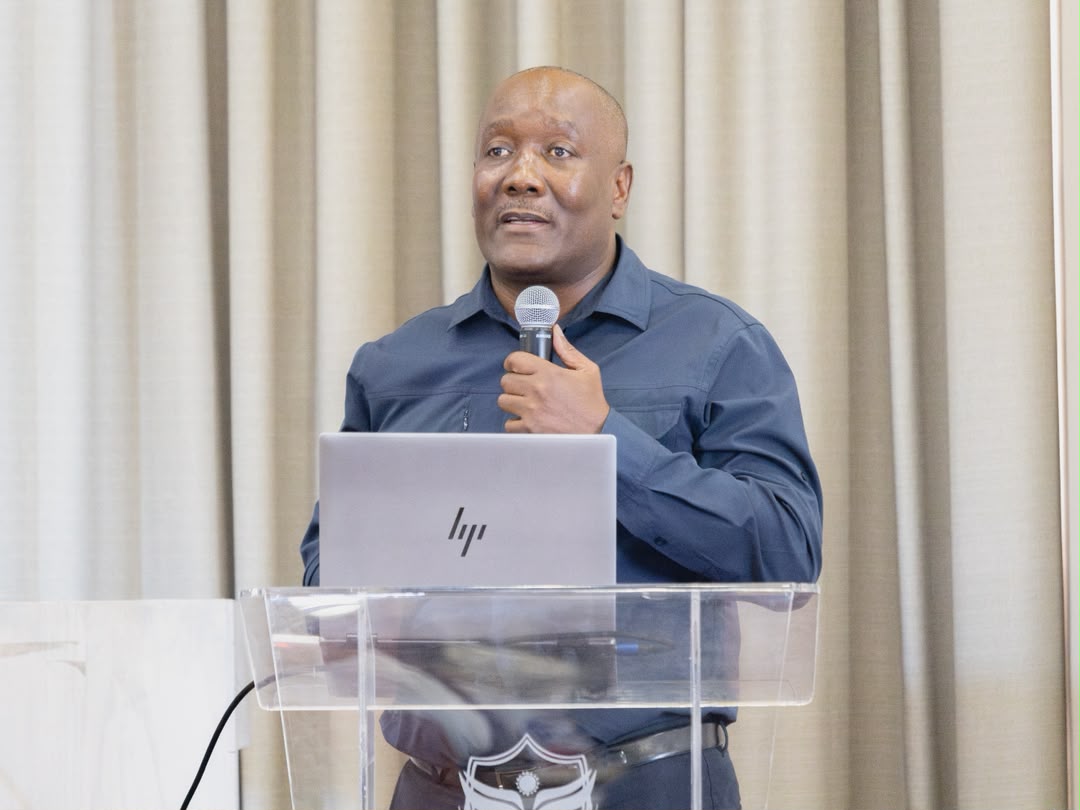
Namibia’s declining diamond revenue is intensifying pressure on government finances, with economist Nghinomenwa Erastus calling for a review of uranium mining agreements and stronger support for local businesses to help broaden the country’s tax base.
His recommendations follow the government’s revised revenue outlook for the 2026/27 financial year, which highlights the risks of relying heavily on mineral income to finance public spending.
Presenting the Mid-Year Budget Review last week in Parliament, Finance Minister, Ericah Shafudah reported that diamond taxes and royalties had fallen from N$5.8 billion in the 2023/24 financial year to a projected N$414 million in 2026/27. The review estimates a N$5.3 billion shortfall over the 2024/25 to 2026/27 medium-term period.
Erastus attributed the decline to global price pressures, competition from lab-grown diamonds and changing demand among luxury consumers.
“It’s a pity that we did not diversify earlier,” he said, warning that Namibia’s heavy reliance on diamond revenue had left government finances vulnerable to changes in international markets.
He said the immediate challenge was finding alternative sources of income, as no other industry could quickly replace diamond revenue on the same scale.
“There is no sector that can fill it,” he said, referring to the gap created by falling diamond revenue.
The pressure is reflected in the government’s revised fiscal projections. Total revenue for the 2026/27 financial year has been reduced by N$1.5 billion, from N$89.6 billion to N$88.1 billion, mainly because of lower mining receipts, reduced fuel levies and lower administrative fees. Mining company taxes and royalties have also been revised down to N$5.2 billion from N$6.1 billion.
The budget review projects a deficit of N$16.3 billion, equivalent to 5.5% of gross domestic product (GDP), while public debt is expected to reach N$201.7 billion, or 68.7% of GDP. Interest payments are projected at N$15.4 billion, equivalent to 17.5% of total revenue.
These figures highlight the challenge facing government as it seeks to maintain public spending while revenue from key sources comes under pressure.
Erastus said replacing lost diamond income would take time because developing productive industries requires sustained investment, planning and support. In the meantime, government could face greater pressure to borrow to meet its spending obligations.
He identified uranium as a potential source of additional government revenue, arguing that Namibia should assess whether the fiscal terms governing mining agreements provide an adequate return to the state.
He called for a review of the arrangements governing uranium developers, including an assessment of the taxes and royalties the sector generates relative to its production and profitability.
“Uranium can fill the gap of diamond,” he said, arguing that government should examine the terms under which the sector operates.
However, his proposal is a recommendation for further assessment, not evidence that uranium mining companies are paying insufficient tax. Determining whether the state could collect more revenue would require an examination of companies’ profits, tax contributions, royalties and existing contractual arrangements.
Erastus cautioned that other mineral industries, including gold, could not necessarily replace diamond revenue immediately, as their contribution would depend on production, available resources and market conditions.
Beyond mining, he argued that Namibia’s ability to generate sustainable revenue depends on expanding economic activity across existing industries.
He said businesses involved in agro-processing, manufacturing, transport and agriculture could contribute more to growth and tax collection if government addressed production costs and provided appropriate support.
“Diversification does not happen in a day. It needs strategies, it needs support,” he said.
He cautioned that businesses struggling to settle tax liabilities could face further difficulties if they were unable to obtain tax compliance certificates needed to secure contracts.
Erastus gave the example of a company employing 10 to 15 people that could lose a contract because it owed the Namibia Revenue Agency (NamRA) N$5 million and could not obtain the required compliance certificate. The example was hypothetical and illustrated the risks he believes financially constrained businesses face.
He called for a coordinated approach involving the finance, agriculture and transport ministries and other relevant institutions to develop support measures for viable local businesses while maintaining tax compliance.
“What is going to work is to expand the tax base,” he said, arguing that government should focus on enabling more companies to survive, grow and pay taxes.
The government has also recognised the need to reduce its dependence on commodity-based revenue. In the Mid-Year Budget Review, Shafudah identified expanded agricultural production, downstream value addition, services industries and renewable energy as areas for accelerating economic diversification.
The review also lowered Namibia’s economic growth forecast for 2026 to 2.3%, from the 3.1% projected in the main budget, reflecting slower-than-expected economic performance during the first half of the year.
For Namibia, the challenge is to manage immediate funding pressures while developing industries that can generate employment, exports and sustainable tax revenue over time.
Erastus argued that diversification should not depend solely on attracting new investment or developing entirely new sectors. Supporting and expanding businesses already operating in the economy could also help increase production and broaden the revenue base.
As diamond income weakens, government faces the task of balancing revenue collection with policies that encourage investment and business growth. Whether uranium can contribute more to public finances, alongside stronger local businesses and other productive sectors, will depend on policy decisions and the time needed for diversification to deliver results.