Home Market & Sectors Tech & Innovation
Namibia’s Digital Education Drive Hits 21.4% Spending Milestone as 2027 Exit Looms
Namibia’s push to digitize its classrooms is facing a critical accountability test.
Namibia’s push to digitize its classrooms is facing a critical accountability test. While the government has signalled a shift from counting devices to measuring actual learning outcomes, new figures reveal that only 21.4% of the country's allocated UNESCO-KFIT project funds have been spent as of mid-2026.
The project, initially titled "ICT Transforming Education in Africa – Phase III," is a five-year programme which was introduced in 2024 running up until 2028. It is funded by the Republic of Korea through UNESCO and covers Namibia, Tanzania, and Uganda.
While the overall three-country project has utilized 49.8% of its US$3.96 million budget (approximately N$67.3 million), Namibia's specific allocation of about N$14.19 million (US$834,677 ) has seen just approximately N$3 million in recorded expenditure.
This leaves roughly US$656,000, or nearly 79% of the country's share unspent, with the project scheduled to conclude in November 2027.
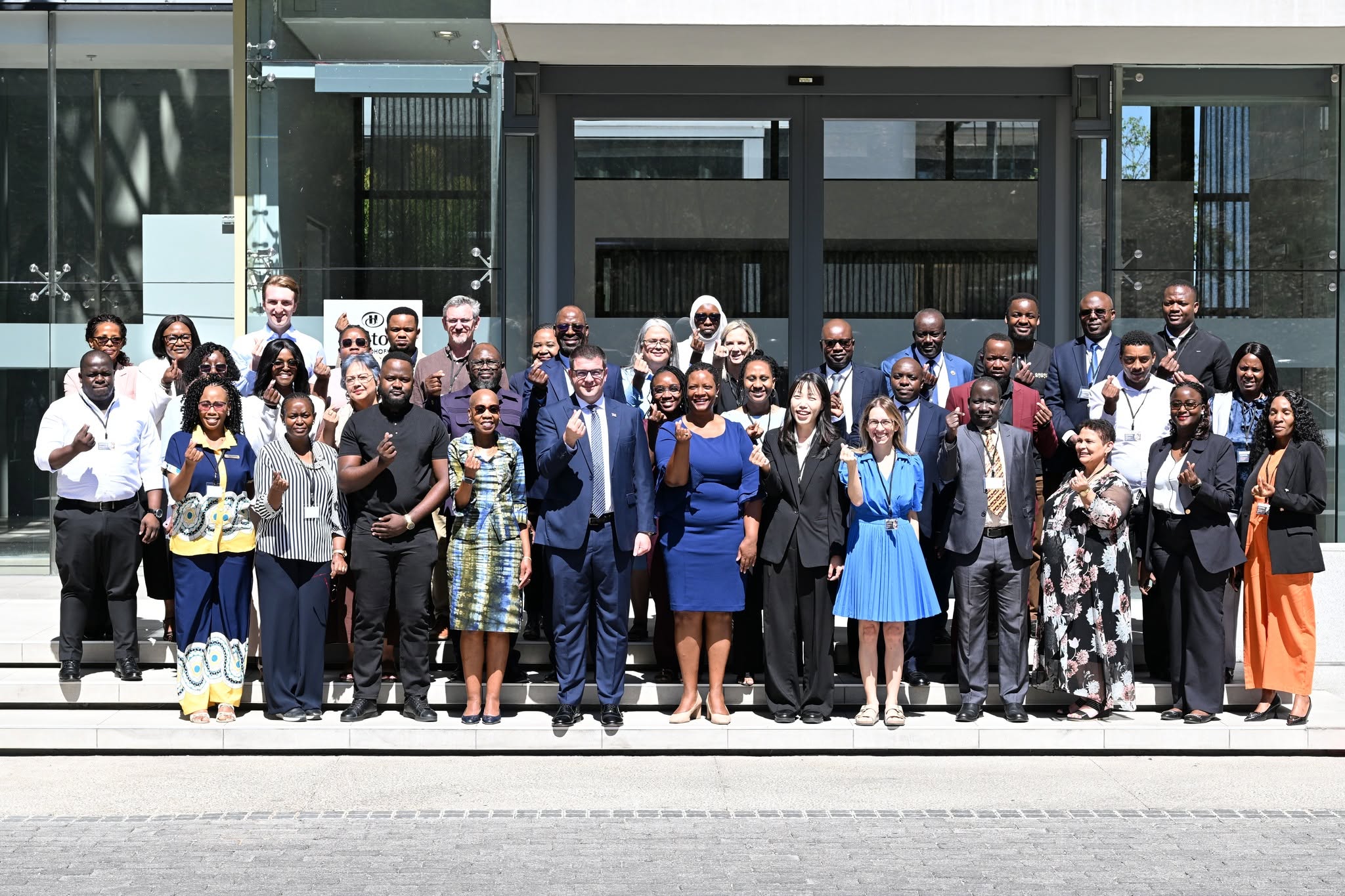
The funding gap was a central theme at the recent UNESCO-KFIT cross-country workshop held in Windhoek, where Namibian Deputy Minister of Education, Dino Ballotti delivered a stark warning about the difference between investment and impact.
"Devices delivered and schools connected tell us what we have put in. They do not tell us what we have achieved," Ballotti told delegates.
"If we cannot show that teachers are teaching more effectively and learners are better learning, but only that we have invested or purchased hardware, then I will say that we have not transformed anything."
While the workshop included a site visit to A. Shipena Secondary School in the Khomas Region as a demonstration site, the education ministry has not released the exact figures on how many schools have directly benefited from the UNESCO project so far.
However, the government’s wider national budget reveals a massive pipeline of schools set to receive digital infrastructure.
According to the education ministry`s 2025/26 budget motivation statement, N$200.23 million was allocated for ICT deployment at educational facilities. The bulk of this, N$159.33 million, was earmarked for device procurement, while N$21.8 million was dedicated to mobile computer laboratories for an additional 50 schools.
Furthermore, Education Minister, Sanet Steenkamp announced earlier this year that the ministry plans to complete computer lab construction in six schools per region across all 14 regions during the 2026/27 financial year, alongside finalizing high-speed internet connectivity for 300 schools nationwide.
As the 2027 deadline approaches, the focus is shifting to the sustainability of these digital systems. Ballotti cautioned that infrastructure without a long-term financial plan is at risk.
"A result with no institution responsible for it, and no place in a national plan or budget, is living on borrowed time," the deputy minister warned.
" He added that a teacher confident with one good tool will achieve more than a teacher handed ten tools but trained on none.