Thursday, 17 September 2026 · Windhoek

Business Pulse 360°

Covering Business from Every Angle

Most Read

Opening the edition

Namibia’s business news & intelligence Vol. 01 | Issue 2 | September 2026

Business Pulse 360° Issue 2 / Sep 2026

To Advertise
With Us
Contact us on: +264 61 000 360

11 September 2026

Facebook Instagram Linkedin businesspulse360.com Vol.01 No:2
Insights / Analysis / Opportunities Covering Business from Every Angle

In this edition

  1. 2 Cover stories 4
  2. 3 Business News Corporate, government, trade, investment and employment news. 6
  3. 4 Sector Pulse Mining, oil and gas, energy, agriculture, tourism, property, transport, finance and technology. 1
  4. 5 Economy 360° GDP, inflation, interest rates, employment, trade and economic policy. 1
  5. 6 Leadership CEO interviews, executive profiles, governance and women in leadership. 2
  6. 7 Entrepreneurship SMEs, start-ups, women and young entrepreneurs. 1
  7. 8 Opinion & Analysis Expert opinions, commentary and deeper analysis. 1
  8. 9 Global Business African and international developments relevant to Namibia. 4
Business Pulse 360 Real business. A 360 degree view.

news@businesspulse360.com | Covering Business from Every Angle

Page 2

Cover stories

Haul trucks on the Erongo uranium belt outside Swakopmund. Business Pulse 360°

Exclusive

Uranium prices push Erongo mines into their strongest quarter in a decade

Sustained spot prices above US$80 a pound have lifted output and royalties across the Erongo uranium belt, but operators warn that water and power constraints will cap how far the boom can run.

Namibia's uranium producers are heading into their strongest quarter in more than ten years, as spot prices holding above US$80 a pound turn marginal tonnes into profitable ones and pull stalled expansion plans off the shelf.

Three operators on the Erongo belt have confirmed to Business Pulse 360° that they are running above nameplate capacity, and a fourth has restarted a mothballed leach circuit. Between them they account for the bulk of the country's oxide output.

What changed

The turn is almost entirely a price story. For most of the last decade the spot market sat below the level at which Namibian heap-leach operations broke even, and the industry survived on long-term contracts signed in better years.

  • Spot prices have roughly doubled from their five-year average
  • Long-term contract prices have followed, though more slowly
  • Reactor restarts and new-build programmes in Asia and Europe have tightened forward demand
  • Secondary supply, which capped prices for years, has largely been absorbed

The result is volume. Operators are processing lower-grade material that would have been left in the ground two years ago, which lifts tonnage, royalties and employment at the same time.

We are mining rock today that was waste on last year's model. That is what a price cycle actually looks like on the ground.

The constraints are physical, not financial

Every operator raised the same two limits: water and power.

Desalinated water supply on the coast is effectively fully allocated, and the additional capacity needed to support a step change in throughput is a multi-year build. Grid supply is the second brake, with operators describing firm power as the binding constraint on any new processing line.

What it means for the fiscus

Higher output at higher prices flows into royalties and corporate tax with a lag, and the Treasury will not see the full benefit in the current financial year. Economists tracking the sector caution that uranium's contribution remains volatile and should not be built into recurrent spending.

For the coastal towns, the more immediate effect is employment and procurement. Contractors report order books filling into next year for earthworks, maintenance and logistics.

Read this story on the site ›

Energy

Offshore drilling programme moves to appraisal as partners commit to two more wells

The joint venture will sink two appraisal wells before deciding on a development concept, in a programme that industry sources put at several hundred million US dollars.

A drillship on station off the southern Namibian coast. Business Pulse 360°

The offshore joint venture operating in Namibia's southern licence area will move from exploration to appraisal, committing to two additional wells before it selects a development concept.

The decision matters more than the drilling itself. Appraisal is the point at which a discovery stops being a geological event and starts being an engineering and financing question.

From discovery to decision

Appraisal wells are designed to answer three things: how much of the reservoir is connected, how well it flows, and what the fluid actually is. Until those are known, no development plan can be costed with any confidence.

  • Two wells firm, with an option on a third
  • Results expected to feed a concept-select decision
  • Long-lead items already being scoped by the operator

A final investment decision remains years away. Industry participants caution against reading a commitment to appraisal as a commitment to production.

The local content question

The more immediate question for Namibian business is supply chain. Appraisal campaigns need logistics bases, marine services, fabrication, catering, waste handling and accommodation, and those contracts are awarded well before first oil.

Local operators say the constraint is certification rather than capability: meeting operator safety and quality standards takes 12 to 18 months of deliberate work.

The companies that started on compliance two years ago are the ones bidding now. It is not something you arrange in a quarter.

Fiscal terms in focus

Attention is turning to the fiscal and regulatory framework that will govern any development. The balance the state strikes between early revenue and long-run share will shape how quickly a project moves.

journalist2@businesspulse360.com

Read this story on the site ›

Banking & Finance

Central bank holds the repo rate, signalling a longer pause than markets expected

With inflation inside the target band and credit growth subdued, the monetary policy committee left the policy rate unchanged and gave little indication that cuts are imminent.

The central business district in Windhoek. Business Pulse 360°

The policy rate stays where it is. That much was expected. The signal in the accompanying statement was not.

Economists had read the combination of soft credit growth and inflation inside the target band as the setup for a cut later this year. The committee's language pointed instead to a longer hold.

Why hold

Three considerations dominate.

  • The currency peg. Policy has to keep a working spread against the anchor currency, which limits how far local rates can diverge.
  • Reserves. Import cover is comfortable, and the committee is not in a hurry to test it.
  • Household balance sheets. Credit growth is weak because demand is weak, and cheaper money does not obviously fix that.

What businesses should plan for

For corporate treasurers the practical message is that the cost of debt is not about to fall quickly. Capital plans built on an assumption of materially cheaper funding within two quarters need revisiting.

Borrowers keep asking when the cuts start. The honest answer is that the committee has told us not to assume a date.

The credit picture underneath

Private sector credit extension remains subdued, with corporate lending flat and mortgage growth slow. Bankers describe an environment where approved facilities are not being drawn down, a sign of caution rather than constrained supply.

That is the uncomfortable part of the data. Rates are not what is holding investment back.

journalist3@businesspulse360.com

Read this story on the site ›

Energy

Green hydrogen consortium narrows first-phase scope to keep the timeline credible

A smaller opening phase, aimed at a firm offtake agreement rather than a headline capacity number, is the clearest sign yet that the sector is being priced honestly.

The consortium behind Namibia's flagship green hydrogen programme has narrowed the scope of its first phase, trading headline capacity for a schedule it can defend.

Read cynically, that is a retreat. Read properly, it is what happens when a project moves from prospectus to bankability.

The arithmetic of an offtake

Green hydrogen projects do not fail on sunshine or wind. They fail on offtake. A lender funds a project against a contract to buy the product at a price that services the debt, and those contracts are scarce.

  • Phase one sized to a signed offtake rather than to resource potential
  • Shared infrastructure specified for later expansion
  • Water, port and grid connections sequenced ahead of electrolyser capacity

Smaller and financed beats larger and announced. Every credible project in the sector globally has gone through the same compression.

What Namibia gets from a smaller phase one

A first phase that actually reaches financial close creates the things that make phase two cheaper: a construction workforce, a permitting precedent, port handling experience and a regulatory track record.

The first plant's job is to exist. The second one is where the economics get interesting.

The risk that remains

The risk is not that phase one is too small. It is that the gap between phase one and phase two is filled with nothing, no offtake, no capital, no continuity of skills. That is where hydrogen programmes elsewhere have stalled.

journalist2@businesspulse360.com

Read this story on the site ›

Business Pulse 360° Cover stories Page 2 of 9

Page 3

Business News

Corporate, government, trade, investment and employment news.

A lodge deck overlooking the Namib. Business Pulse 360°

Tourism

Tourism arrivals recover past pre-pandemic levels, but spend per visitor lags

Lodges report full shoulder seasons and longer average stays, yet operators say margin pressure from airlift costs and imported inputs is holding profitability below 2019 levels.

Visitor numbers are back. The money is not, at least not in the same shape.

Operators across the Namib, Etosha and the north-west report occupancy at or above pre-pandemic levels, with a marked lengthening of the shoulder season. What they are not reporting is a return to 2019 margins.

Where the money goes

Three cost lines have moved faster than rates.

  • Airlift. Fewer direct long-haul options mean higher landed cost per visitor and more connection risk.
  • Imported inputs. Everything from vehicle parts to kitchen supplies has repriced.
  • Skilled labour. Guides, chefs and maintenance staff who left the sector during the shutdown have not all come back.

The self-drive shift

The composition of arrivals has changed. Self-drive and smaller-group travel have grown relative to large coach tours, which is good for road-network businesses and small lodges and harder for operators built around volume.

Occupancy tells you the beds are full. It does not tell you what the guest spent on the way there.

Conferencing is the quiet opportunity

Business tourism and conferencing remain well below potential. Operators point to venue capacity and airlift as the two constraints, and note that a single reliable long-haul route does more for the sector than any marketing budget.

Read this story on the site ›

Agriculture & Oceans

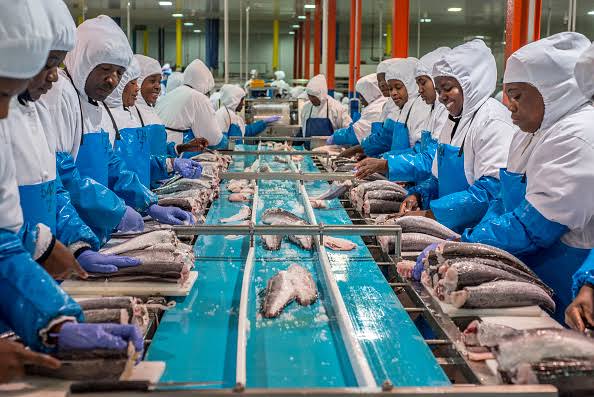
Fishing rights allocation leaves quota holders planning around a shorter horizon

Shorter allocation periods make vessels harder to finance, and processors say the effect shows up in onshore investment rather than in catch volumes.

Quota is not the only thing that matters in a fishing right. Duration matters just as much, and it is duration that the industry is talking about.

Processors and vessel owners say shorter allocation horizons make capital investment difficult to justify, because the asset lives are far longer than the certainty of access.

Why tenure drives onshore investment

A freezer trawler or a processing line is a 15-to-25-year asset. Financing it against a right measured in single-digit years pushes the risk premium up and the investment appetite down.

  • Vessel replacement deferred, with maintenance extending fleet age
  • Onshore processing capacity upgraded incrementally rather than rebuilt
  • Value-added product lines harder to justify than frozen bulk

The catch keeps coming. What changes is how much of the value is captured onshore.

Employment sits onshore

The employment argument runs the same way. Sea-going crews are a fraction of the sector's jobs; the processing floor in Walvis Bay is where the numbers are, and processing is exactly what long-horizon capital builds.

You can land the same tonnage and create half the jobs. That is the part that gets missed.

What operators are asking for

The industry's ask is predictability more than volume: clear criteria, clear timelines, and enough tenure to finance the vessels and lines that turn fish into products.

journalist4@businesspulse360.com

Read this story on the site ›

Tech & Innovation

Data centre build-out begins to change the economics of cloud services locally

Local hosting capacity and improved international transit are cutting latency and repatriating workloads that had migrated to South African and European facilities.

For a decade the answer to "where does your data live" was "somewhere else". That is starting to change.

New commercial hosting capacity in Windhoek, combined with better international transit, is making it economic to run workloads locally that had drifted offshore for cost and reliability reasons.

What is actually improving

  • Latency. Applications served locally feel different, particularly interactive business systems.
  • Transit cost. Better capacity and more route diversity have brought bandwidth pricing down.
  • Compliance. Regulated sectors get a clean answer on data residency.

The constraint is power, again

Operators are candid that the binding constraint is not demand but firm power and cooling. Every megawatt of rack capacity needs reliable supply and a redundancy plan, and that is a grid conversation.

Racks are the easy part. Selling a customer on uptime is a power conversation.

Who benefits first

Financial services, insurance, health and the public sector are the obvious early movers, because they carry both latency-sensitive systems and data residency obligations. Smaller businesses benefit indirectly, through the local software firms that build on the new capacity.

journalist5@businesspulse360.com

Read this story on the site ›

Agriculture & Oceans

Livestock exporters push for feedlot capacity to keep value in the country

Weaner exports remain the default channel, but processors argue that domestic finishing and abattoir capacity would capture materially more value per animal.

The argument over weaner exports is really an argument about where value is added.

Selling a weaner across the border is simple, quick and low-risk for the farmer. Finishing that animal locally and exporting the carcass is worth more per head, to the country, if not always to the individual producer.

The economics as producers see them

  • Weaner sales convert to cash immediately, with minimal capital
  • Finishing requires feed, water, infrastructure and price risk appetite
  • Abattoir throughput needs consistent supply to hold certification and margins

Nobody disputes the value-add. The dispute is about who carries the working capital and the risk.

Feed is the real question

Feedlot economics live and die on feed cost, and in a dry country that means imported grain or irrigated fodder. Producers who have tried both describe feed as the variable that decides whether finishing works at all.

Show me a landed feed price I can plan around and I will show you a feedlot.

Market access matters more than capacity

Exporters point out that certified access to premium markets is what makes finishing worth doing. Capacity without market access is a cost centre.

journalist4@businesspulse360.com

Read this story on the site ›

Banking & Finance

Insurance sector consolidation accelerates as smaller players struggle with compliance costs

Rising capital and reporting requirements are pushing sub-scale insurers and brokers towards mergers, in a market that already has few independent players.

Compliance has become a scale business, and that is reshaping the insurance market.

Capital adequacy and reporting requirements that a large insurer absorbs as a line item can consume a meaningful share of a small one's operating budget. The result is predictable: consolidation.

The pressure points

  • Actuarial and audit capacity is scarce and priced accordingly
  • Systems investment for reporting does not scale down well
  • Reinsurance terms favour larger, more diversified books

What it means for buyers

Fewer, larger insurers is not automatically bad for policyholders, bigger balance sheets pay claims. But brokers warn that reduced competition in specialist lines shows up as narrower cover and firmer pricing.

In motor and property you still have a market. In specialist liability you have a conversation with whoever will write it.

The broker squeeze

Independent brokers face the same arithmetic. Advice remains valuable, but the administrative load of placing and servicing business has grown, and small practices are joining larger networks to carry it.

journalist3@businesspulse360.com

Read this story on the site ›

Banking & Finance

Retail credit tightens as lenders reprice unsecured lending

Approval rates on unsecured personal lending have fallen as banks reweight affordability assessments, with knock-on effects for retailers.

The consumer credit tap has not closed, but it has narrowed.

Lenders have tightened affordability assessments on unsecured personal lending, and retailers dependent on credit-funded purchases are feeling it first.

What is driving it

  • Arrears in specific cohorts running above model expectations
  • Higher provisioning requirements on unsecured books
  • A deliberate shift towards secured and salary-linked lending

Where it shows up

Furniture, electronics and vehicle retail see the effect fastest. Grocery and essentials are largely unaffected, which tells you the tightening is targeted rather than general.

We are not turning away good customers. We are asking harder questions of marginal ones.

The household picture

Debt service as a share of disposable income remains the pressure point. Until wage growth outpaces it, credit-funded consumption stays subdued regardless of where the policy rate sits.

journalist3@businesspulse360.com

Read this story on the site ›

Business Pulse 360° Business News Page 3 of 9

Page 4

Sector Pulse

Mining, oil and gas, energy, agriculture, tourism, property, transport, finance and technology.

Innovation

Start-up funding gap sits between grant money and venture capital

Founders can find early grants and, occasionally, later regional venture money. The stage in between is where Namibian companies stall.

There is money for an idea and money for a proven business. The gap is in the middle, and it is where most Namibian start-ups die.

Founders describe a funding landscape with accessible early grant and competition money, occasional regional venture interest at scale, and very little in between.

The missing stage

  • Grants get you to a prototype and a first customer
  • Regional venture funds want traction most local companies cannot yet show
  • Bank debt requires security a young company does not have
  • Angel capital exists but is unorganised and hard to find

What founders do instead

They bootstrap on consulting revenue, which slows the product, or they relocate to a market with deeper capital. Both outcomes cost the local economy.

Every founder here has a consulting business subsidising a product business. That is the funding gap made visible.

What would help

Organised angel networks, convertible instruments with standard local documentation, and matched-funding structures that share risk with private capital. All three are policy-adjacent and none require a new institution.

Read this story on the site ›

Business Pulse 360° Sector Pulse Page 4 of 9

Page 5

Economy 360°

GDP, inflation, interest rates, employment, trade and economic policy.

Analysis

What the port expansion actually changes for Namibian exporters

Container capacity was never the binding constraint. Corridor reliability, customs throughput and backhaul economics are what decide whether cargo routes through Walvis Bay.

Port capacity is the easiest part of a logistics chain to photograph and the least likely to be the bottleneck.

Namibia's pitch as a corridor to the SADC interior rests on three things that have little to do with quay length: how predictable the road and rail legs are, how fast cargo clears, and whether trucks have something to carry on the way back.

The three real constraints

  • Corridor reliability. A shipper prices variance, not average transit time.
  • Customs throughput. Border dwell time can erase a port's handling advantage.
  • Backhaul. Empty return legs load the whole cost onto one direction.

Capacity helps when the other three work. On its own it produces an underused terminal.

Where the opportunity is real

For landlocked neighbours, the value proposition is genuine: a shorter, less congested route to the Atlantic than the alternatives. Mining inputs and bulk exports are the natural first cargoes because they are large, planned and price-sensitive.

Nobody reroutes a supply chain for a marketing brochure. They do it for a transit time they can commit to a customer.

What would move the needle

Single-window customs processing, published corridor performance data and coordinated cross-border operating hours would do more for volumes than additional quay metres.

Read this story on the site ›

Business Pulse 360° Economy 360° Page 5 of 9

Page 6

Leadership

CEO interviews, executive profiles, governance and women in leadership.

Interview

“We stopped chasing volume and the business finally worked”

The managing director of a Windhoek manufacturer on cutting the product range by two thirds, losing a third of revenue, and doubling profit.

Cutting the range was the hardest decision, and the one that saved the company.

In an extended conversation, the managing director of a Windhoek-based light manufacturer describes deliberately shrinking a business, and why the numbers got better as the revenue got smaller.

On the decision

We were making 60 products and understanding maybe 15 of them. Everything else was there because a customer once asked. When we costed each line properly, a third of them lost money on every unit.

On the reaction

The market did not punish us the way we feared. Two big customers left. The rest stayed, and started ordering more of the lines we actually make well.

Revenue fell by about a third. Profit roughly doubled. The factory got quieter and the accounts got better.

On what made it possible

  • Proper unit costing, including the cost of complexity
  • A willingness to lose customers who were unprofitable
  • Machine time freed for the lines that earned their keep
  • Working capital released from slow-moving stock

On advice to other manufacturers

Cost your products individually before you chase another market. Most small manufacturers here do not have a demand problem. They have a mix problem, and it hides inside a single gross margin number.

Read this story on the site ›

Executive

Boardroom moves: three appointments that signal where the banks are heading

Two chief risk officers and a head of digital, all appointed within a month, tell you what the sector is worried about and what it is spending on.

Appointments are a strategy document that companies publish by accident.

Three senior hires in the local banking sector this month point in the same direction: risk discipline and digital delivery, in that order.

What the hires say

  • Two chief risk officers appointed externally, both with regional regulatory experience
  • A head of digital recruited from outside financial services entirely
  • Credit and collections leadership strengthened at the same time

Reading the pattern

External risk hires usually mean one of two things: a regulatory relationship that needs rebuilding, or a credit book that needs a firmer hand. Recruiting digital leadership from outside banking says the incumbents are no longer competing only with each other.

When banks hire product people from retail and telecoms, they have decided the competition is convenience.

The talent constraint

Every executive we spoke to raised the same difficulty: the pool of local candidates with both sector depth and regulatory experience is small, and the same names circulate. Several institutions are now funding structured development pipelines rather than competing for finished executives.

journalist3@businesspulse360.com

Read this story on the site ›

Business Pulse 360° Leadership Page 6 of 9

Page 7

Entrepreneurship

SMEs, start-ups, women and young entrepreneurs.

Special report

Special report: the quiet rise of Namibian franchising

Franchising has become one of the most reliable routes into business ownership in Namibia, and one of the least examined. We look at the economics, the failures and the terms that matter.

Franchising rarely makes the business pages, which is odd, because it is quietly one of the most common ways Namibians become business owners.

The model is attractive for obvious reasons: a proven format, a recognised brand, supplier arrangements and training. It is also more demanding than most first-time owners expect.

The economics

  • Entry cost is substantial, and typically requires meaningful unencumbered equity
  • Royalties and marketing levies are charged on turnover, not profit
  • Fit-out specifications are non-negotiable and often the largest single outlay
  • Site selection is the variable that most determines success

Where franchisees get hurt

Three failure patterns recur.

The first is under-capitalisation: financing the fit-out but not the first year of working capital. The second is a marginal site accepted because it was affordable. The third is a franchisee who wanted to be an owner but not an operator.

The brand brings customers to the door once. Everything after that is how you run the shop.

The terms that matter

Prospective franchisees should read three clauses before any others: territorial exclusivity, renewal terms, and what happens to the business if the franchisor changes hands. Those decide whether you own an asset or rent a job.

Why it matters for the economy

Franchising transfers operating systems and management discipline into the local economy at scale, and it creates formal employment with documented processes. That is not a small thing in a market where most enterprises are informal.

Read this story on the site ›

Business Pulse 360° Entrepreneurship Page 7 of 9

Page 8

Opinion & Analysis

Expert opinions, commentary and deeper analysis.

Opinion

Namibia needs a capital market, not just a stock exchange

Domestic institutional money is abundant and local investable assets are scarce. Fixing that mismatch is a policy design problem, not a marketing problem.

Namibia does not have a shortage of savings. It has a shortage of things to buy with them.

Pension and insurance funds hold substantial assets and face domestic asset requirements. Meanwhile mid-sized Namibian companies that could use growth capital find equity expensive and bank debt restrictive. Both statements are true at once, and that is the problem.

Why the mismatch persists

  • Ticket size. Institutional investors need positions large enough to justify diligence; most local raises are far smaller.
  • Liquidity. Without a secondary market, a position becomes a permanent commitment.
  • Disclosure. Listing obligations are a real cost for a family-held company.

What would actually help

The answer is not to exhort funds to invest locally. It is to build instruments they can hold.

  • Pooled vehicles that aggregate small raises into institutional-sized exposures
  • A functioning corporate bond market with credible pricing benchmarks
  • A junior board with proportionate disclosure and a realistic cost of listing
  • Standardised, cheap documentation for mid-market transactions

Capital does not avoid Namibia because it dislikes Namibia. It avoids transactions it cannot size, price or exit.

The prize

A working domestic capital market keeps returns onshore, gives growing companies an alternative to bank debt, and gives savers exposure to their own economy. That is worth more than another listing announcement.

Read this story on the site ›

Business Pulse 360° Opinion & Analysis Page 8 of 9

Page 9

Global Business

African and international developments relevant to Namibia.

Africa

SADC trade integration: the paperwork is the barrier, not the tariffs

Tariff schedules have largely been agreed. Rules of origin, standards recognition and border processing are where regional trade still stalls.

Ask an exporter what stops regional trade and you will not hear about tariffs.

You will hear about certificates of origin, standards that are not mutually recognised, and border posts that keep different hours on each side.

The non-tariff reality

  • Rules of origin are documentation-heavy and interpreted inconsistently
  • Standards and testing often require duplicate certification per market
  • Border hours and systems are unsynchronised, adding dwell time
  • Payments across currencies add cost and settlement delay

What this costs

Every one of those items is a fixed cost, which means it falls hardest on small consignments and small exporters. A large miner absorbs it; a food processor shipping pallets cannot.

We can compete on price into the region. We cannot compete on paperwork.

Where progress is real

Digital certificate exchange and mutual recognition of testing have moved faster than headline negotiations, and exporters report genuine improvement on specific corridors. The gains are unglamorous and compound quietly.

Read this story on the site ›

Europe

European demand for critical minerals reshapes who Namibia negotiates with

Supply-security policy in Europe has turned mineral offtake into a diplomatic conversation, and changed what a producing country can ask for.

Mineral buyers used to negotiate on price and grade. Increasingly they negotiate on security of supply, and that shifts leverage.

European industrial policy now treats access to specific minerals as a strategic question rather than a purely commercial one, which makes governments party to conversations that were previously between companies.

What changes for a producer country

  • Offtake discussions come with policy interest attached
  • Processing and beneficiation are on the table in a way they were not
  • Financing support and infrastructure become negotiable alongside volume

The opportunity is beneficiation. A buyer worried about supply security has reasons to help build processing capacity closer to the resource.

The caution

Strategic interest is cyclical. Commitments made when supply is tight need to survive the moment when it is not, which means contracts and infrastructure rather than memoranda.

The test of a partnership is what it looks like in a surplus.

The domestic prerequisite

None of it works without power, water and skills. Those are decisions Namibia makes for itself, and they determine how much of the value chain can realistically be captured locally.

journalist1@businesspulse360.com

Read this story on the site ›

Asia

Asian buyers return to the beef market on firmer terms

Renewed interest from Asian importers offers volume, but exporters say the specification and traceability requirements are stricter than the market they replaced.

Volume has come back to the beef export order book. So has a longer list of requirements.

Exporters describe renewed Asian buying interest as genuine and substantial, but note that the terms are more demanding than the European trade many producers know best.

What buyers are asking for

  • Full traceability from farm to carton
  • Specific cut specifications and packaging formats
  • Consistent volumes on a contracted schedule
  • Third-party audited certification

Why that is difficult here

Namibian traceability systems are a genuine competitive advantage, the country's animal identification infrastructure is stronger than most. The harder part is consistency of supply, which depends on rainfall, herd cycles and abattoir throughput.

We can prove where the animal came from. Promising the same tonnage every month for a year is the harder promise.

The margin question

Higher specification usually means higher price, but also higher cost to serve. Processors are cautious about committing capacity to contracts that look attractive on price and thin on margin once compliance is costed.

journalist4@businesspulse360.com

Read this story on the site ›

Global Markets

Commodity currencies wobble as rate expectations shift again

A repricing of global rate expectations has pushed commodity-linked currencies around, with knock-on effects for import costs and debt service locally.

The local currency does not have an independent story this week. It has an imported one.

Shifting expectations for global policy rates have moved the dollar, which has moved commodity-linked currencies, which moves the rand and therefore the Namibia dollar.

What it means practically

  • Importers face repricing on landed costs with a one-to-two-month lag
  • Exporters get a temporary translation benefit on dollar receipts
  • Foreign-currency debt service costs move immediately

The hedging question

Treasurers are asking whether to hedge into the move or wait it out. The honest answer depends on whether the exposure is transactional or structural, and most local corporates have not separated the two clearly.

If you cannot say which of your costs are dollar costs, you are not hedging. You are guessing.

The medium-term view

Nothing in the week's moves changes the structural picture: a small, open, commodity-exposed economy pegged to a larger neighbour imports both its monetary conditions and its volatility.

journalist3@businesspulse360.com

Read this story on the site ›

Business Pulse 360° Global Business Page 9 of 9

Download this edition as a PDF Every page, laid out to print.