Home Market & Sectors Agriculture & Oceans
Oceans
Fishing rights allocation leaves quota holders planning around a shorter horizon
Shorter allocation periods make vessels harder to finance, and processors say the effect shows up in onshore investment rather than in catch volumes.
Quota is not the only thing that matters in a fishing right. Duration matters just as much, and it is duration that the industry is talking about.
Processors and vessel owners say shorter allocation horizons make capital investment difficult to justify, because the asset lives are far longer than the certainty of access.
Why tenure drives onshore investment
A freezer trawler or a processing line is a 15-to-25-year asset. Financing it against a right measured in single-digit years pushes the risk premium up and the investment appetite down.
- Vessel replacement deferred, with maintenance extending fleet age
- Onshore processing capacity upgraded incrementally rather than rebuilt
- Value-added product lines harder to justify than frozen bulk
The catch keeps coming. What changes is how much of the value is captured onshore.
Employment sits onshore
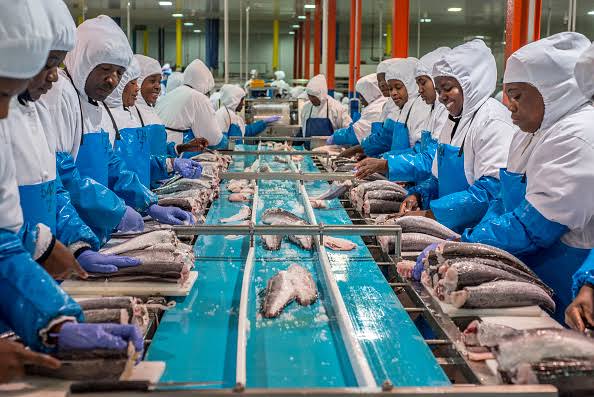
The employment argument runs the same way. Sea-going crews are a fraction of the sector's jobs; the processing floor in Walvis Bay is where the numbers are, and processing is exactly what long-horizon capital builds.
You can land the same tonnage and create half the jobs. That is the part that gets missed.
What operators are asking for
The industry's ask is predictability more than volume: clear criteria, clear timelines, and enough tenure to finance the vessels and lines that turn fish into products.